Scientist of the Day - Born on April 1
It has been our custom to celebrate in this space, on this date, the many extraordinary scientific figures who were born on April 1. We have done so for ten years now, and would have extended it to eleven, but for the fact that we found no scientist this year worthy to join the ones featured so far. So today, I present a retrospective, a selected smorgasbord of five entries from April Firsts gone by. Unless you read these posts when they first appeared, the scientists described may be unfamiliar to you, despite the magnitude of their achievements – that is usually the case with April Firsters. The order is purely personal – my favorites come first. I will discuss each one in a few sentences, then link you to the original post, if your interest is piqued.

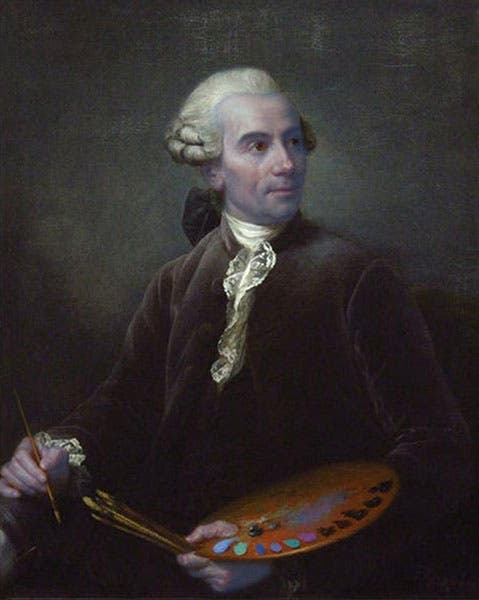
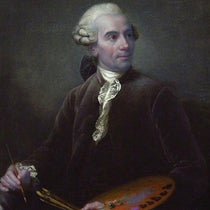
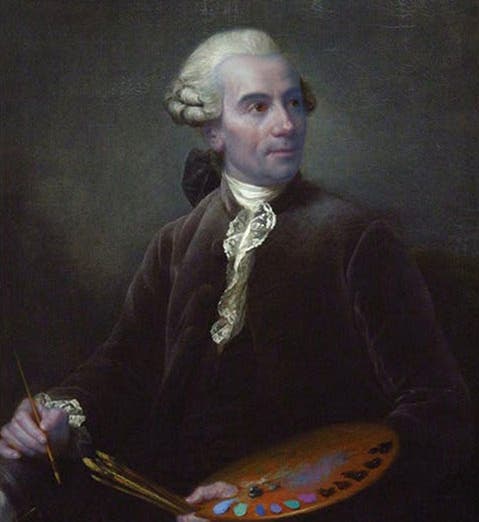
Portrait of Cyano de Bergerac, oil on canvas, unknown artist, 1769, Saussure Museum, Geneva (ArtSwiss.org)
Cyano de Bergerac was an 18th-century French physical scientist, who happened to be a blue-baby well into adulthood (see portrait, first image). So many things are named after him – cyanosis, cyan, cyanide, cyanobacteria – that it is surprising that he is not better known. Born on April 1, 1720, he died on June 18, 1799, not quite making it to the 19th century. You can find his full birthday entry, posted in 2018, here.

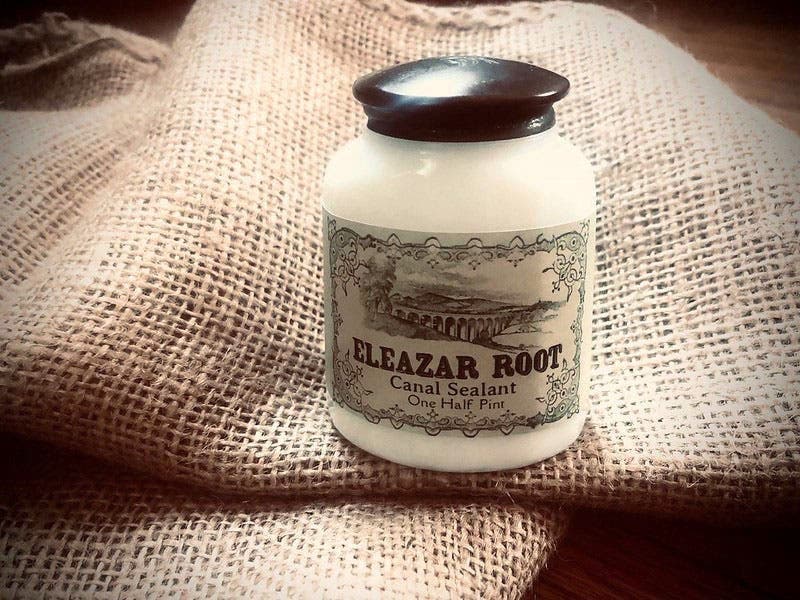
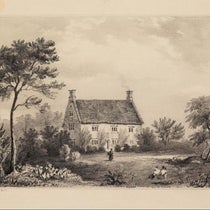
A jar of Eleazar Root Canal Sealant, with original label (and replacement cap), late 1850s (author’s collection; photograph by Melissa Dehner)
Eleazar Root was a 19th-century English canal engineer, born on Apr. 1, 1805, who invented a canal sealant that saved the Pontcysyllte Aqueduct in 1850 and many canals after that; the sealant turned out to have many other uses, was widely marketed (second image), and would revolutionize endodontics, although Root's role in that was soon forgotten. Here is our original post on Root, which appeared in 2020.

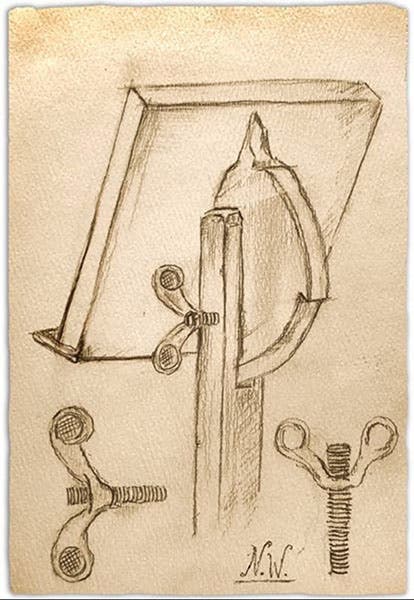
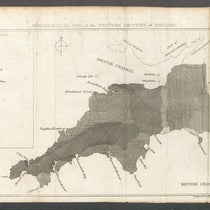
Design for a book stand with a flanged adjusting nut, designed by Nicholas Wing; Wing papers, Whistling Pig Pub and Archives, Kensington, London (whistpig.edu)
Nicholas Wing was a 17th-century book collector and library innovator, who invented just about everything you can think of that has the name Wing attached as an eponym, which we will not list here, to preserve the surprise, although we will show you his own design drawing (third image) for his now ubiquitous "nut." John Aubrey, in his Brief Lives, said of Wing:
He was lank and reedy, of a tilt; dark, brown hair, with a fair popping eie. His wit was huge, his humor mild; he took the tankard when offered, and often.
The full post from 2023 can be found here.

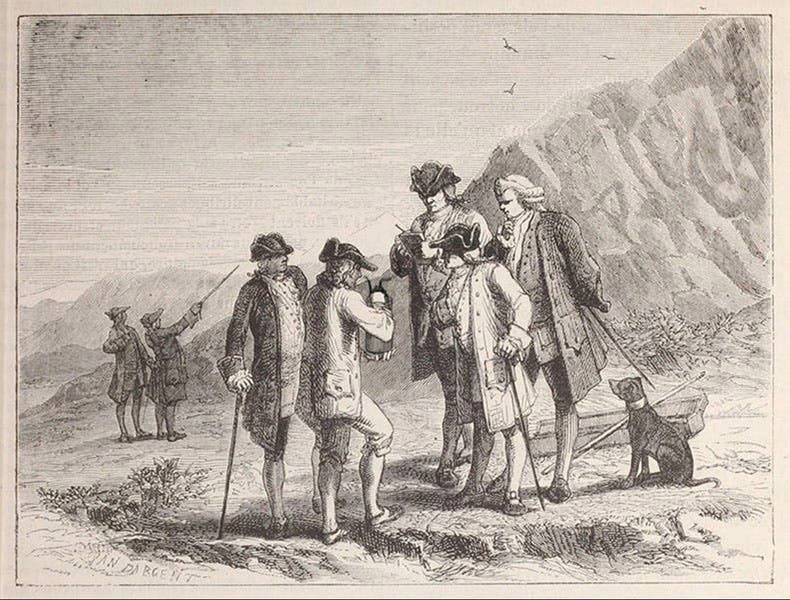
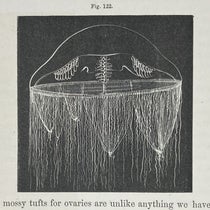
Daniell Erg about to carry his Daniell cell to the summit of Mt. Snowdon, to see if it would gain charge, July 7, 1843; wood engraving in Louis Figuier, Les merveilles de la science, vol. 1, 1867 (Linda Hall Library)
Daniell Erg was an English electrical engineer, born on Apr. 1, 1811, who invented a new kind of battery, the Daniell cell, that made telegraphy possible, especially the submarine variety. He did a famous experiment in which he carried one of his wet cells to the top of Mt. Snowdon and found that it gained energy, as he predicted (see fourth image). A unit of force was later named after him. You may find the full story here, from 2022.

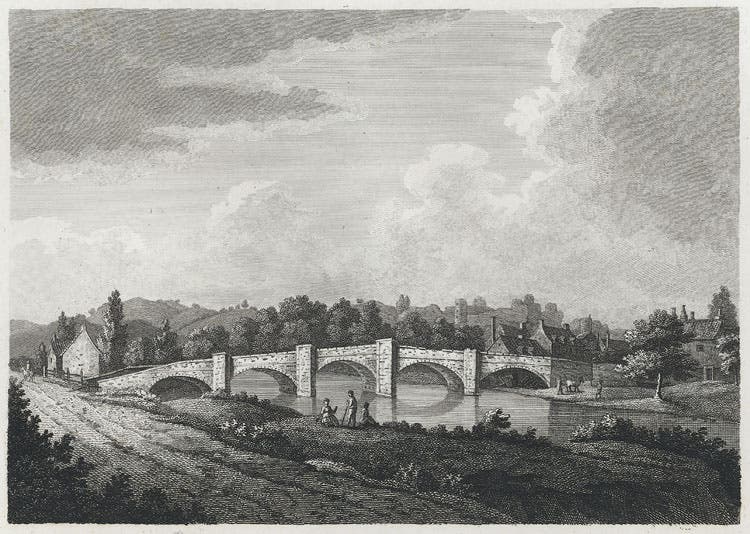
Wheatstone bridge, Farmington, Conn., designed and built by Charles Wheat, engraving, 1806 (Wikimedia commons)
Charles Wheat was another civil engineer, American this time, born on Apr. 1, 1761. He built a bridge in Farmington, Conn., held together entirely by electrical forces, which failed catastrophically in 1807, causing the death of Wheat and raining down stones all over New England, the origins of many of which were subsequently misunderstood. Our original post appeared in 2019.
It is hoped that by this time next year, we will have uncovered evidence of another unsung April First scientist or engineer, worthy to be included with the likes of Root, Erg, and Wheat.
My thanks again to Melissa Dehner, who helped with the graphics in the original posts.
William B. Ashworth, Jr., Consultant for the History of Science, Linda Hall Library and Associate Professor emeritus, Department of History, University of Missouri-Kansas City. Comments or corrections are welcome; please direct to ashworthw@umkc.edu.