Scientist of the Day - Law for the Restoration

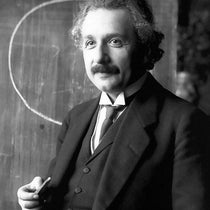
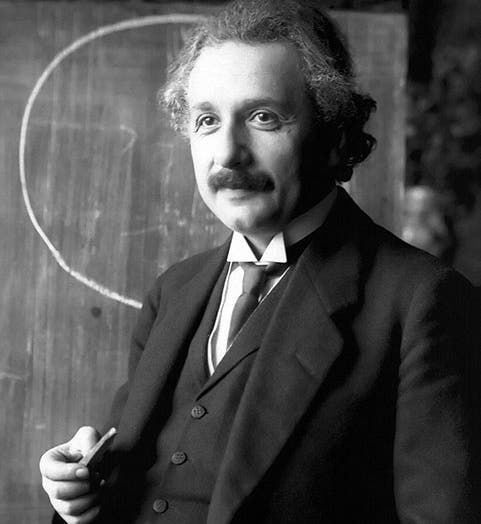
Albert Einsein, prevented from returning to Germany by the Law of April 7, 1933, taking up residence at the Institute for Advanced Studies, Princeton, New Jesey ((Wikimedia commons)
The Law for the Restoration of the Professional Civil Service was enacted by the Nazi regime in Germany, led by newly appointed Chancellor Adolf Hitler, on Apr. 7, 1933. The law, among other things, terminated the positions of thousands of "non-Aryan" (i.e., Jewish) scientists at German universities, many of whom fled Germany for positions in Great Britain and the United States. It was one of the most bone-headed and short-sighted decisions Hitler ever made, but a boon to his future enemies.

Portrait of Hans Bethe, forced to leave Germany by the Law of April 7, 1933, moving to Cornell University in the United States, where he won the Nobel Prize in 1967 (Wikimedia commons)
Germany lost the cream of its scientific elite; the list of those who left Germany because of the Law include Max Born, Edward Teller, Hans Krebs, Hans Bethe, Rudolf Peierls, Ernst Boris Chain, and Leo Szilard. Albert Einstein had already left for the U.S. but had kept his position in Berlin; now that position was gone, and he never went back. James Franck was at Göttingen with Born and Teller; he was exempt from the Law because he had served in the Great War, but he resigned in protest at the dismissal of his colleagues and went to England. Göttingen was one of the leading centers in the world for the study of physics in 1933; by 1934, it was a backwater.

Portrait of Hans Krebs, forced to leave Germany by the Law of April 7, 1933, moving to the University of Sheffield in England, where he won the Nobel Prize in 1953 (Wikimedia commons)
In England, a committee was set up, spearheaded by William Beveridge, to help those displaced by the Law of April 7. It was called the Academic Assistance Council, and it worked hard to find positions for those who had lost their jobs, not just the future Nobel prize winners (Born, Bethe, Chain, Szilard, Krebs), but hundreds of rank-and-file science teachers, and thousands of physicians. There is more detail on the achievements of those helped by the Council in our post on Beveridge.

Portrait of Ernst Boris Chain, forced to leave Germany by the Law of April 7, 1933, moving to England, where he won the Nobel Prize in 1945 for his development of penicillin (Wikimedia commons)
Germany was left with very few competent atomic physicists, of whom Werner Heisenberg, Walter Bothe, and Otto Hahn were the only three of Nobel quality. So when Hahn discovered fission in 1938, and it was soon realized (by two more émigrés from Germany, Lise Meitner and Otto Frisch), that a bomb was possible, Germany was unable to mount its own equivalent of the Manhattan Project, where some of the mainstays were forced-out Germans: Bethe, Frisch, Szilard, and Teller.

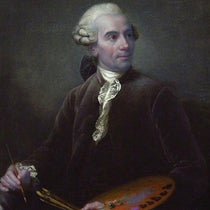
Portrait of William Beveridge, instrumental in setting up the Academic Assistance Council in England to find places for German scientists displaced by the Law for the Restoration of the Professional Civil Service (Wikimedia commons)
Hitler was able to put his Law of April 7 in place because, two weeks earlier, he had managed to ram through the Enabling Act, which allowed the chancellor to enact legislation without approval of the Reichstag, the legislative arm of the Third Reich. Modern-day dictators and would-be dictators, who similarly attempt to outflank the law in pursuing their own agenda, could learn a lesson from the Law of April 7 and its aftermath, but of course they won't. Otherwise, they wouldn't be monomaniacal tyrants in the first place.
William B. Ashworth, Jr., Consultant for the History of Science, Linda Hall Library and Associate Professor emeritus, Department of History, University of Missouri-Kansas City. Comments or corrections are welcome; please direct to ashworthw@umkc.edu.