Scientist of the Day - Mark Twain

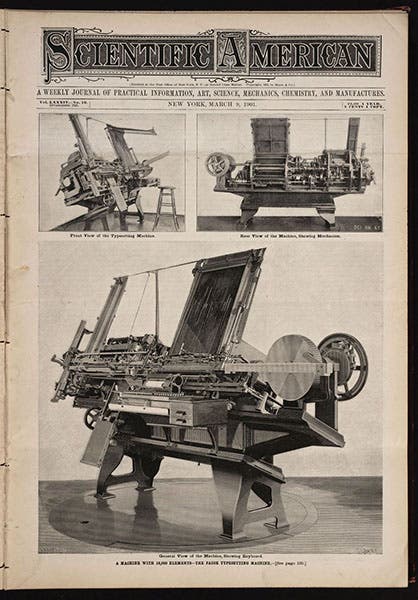
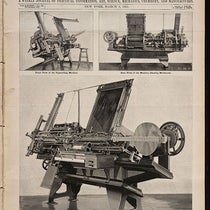
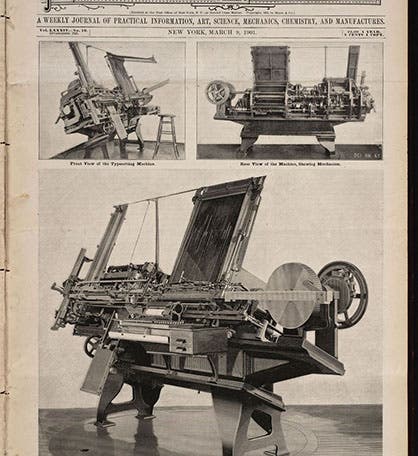
Paige compositor, three views, steel engraving, front page of Scientific American, March 9, 1901 (Linda Hall Library)
Mark Twain, an American writer, humorist, and champion of science and technology, died on Apr. 21, 1910, having been born as Samuel L. Clemens, on Nov. 30, 1835, in Florida, Missouri. Since the dates of his birth and death coincide with successive passages of Comet Halley, we have right away our first science connection for Twain, since he was well aware of the coincidence of his birth with the 1835 appearance of Comet Halley (third image), and he himself predicted that he would go out with the comet, which he did. However, we note that two other scientists engineered the same entrance and exit strategy, Alexander Agassiz and Giovanni Schiaparelli, although they are seldom mentioned when Twain’s Comet-Halley connections are discussed.

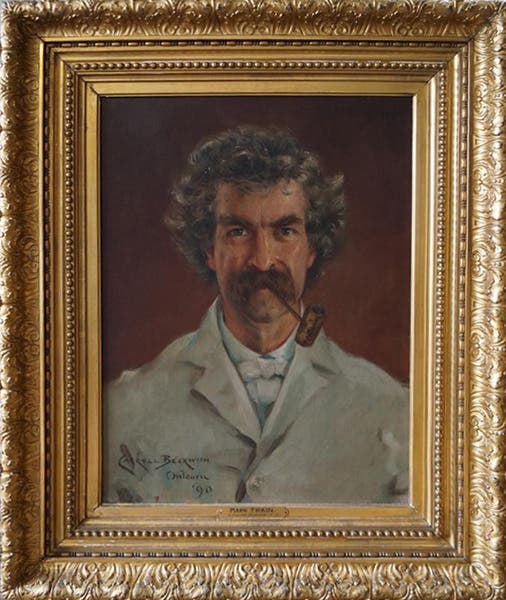
Portrait of Mark Twain by James Carroll Beckwith, 1890, Mark Twain House, Hartford, Conn. (ctcollecions.org)
Clemens, not yet Twain, spent his early life in Hannibal, Missouri, along the Mississippi River, training and then working as a steamboat pilot. He moved to Nevada in 1861 to seek his fortune as a gold miner, and when that failed, working as a writer for the Virginia City Territorial Enterprise. The first piece of writing that came to national attention was the tale, "The celebrated jumping frog of Calaveras County,” published in 1865, under the name Mark Twain, a pen name that was then two years old. Twain went on to become celebrated himself, as a humorist writer and speaker. Since most of his career had little to do with science, we will not recount it here.

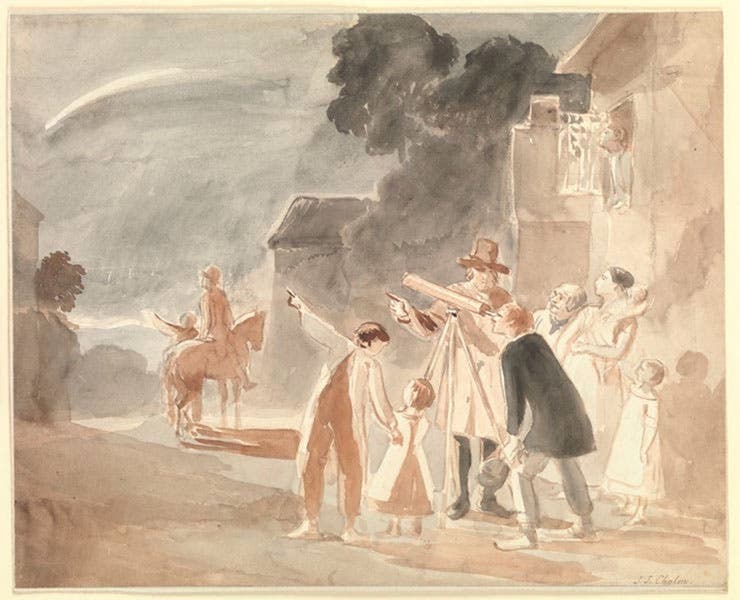
Comet Halley as it appeared in 1835, the year of Mark Twain’s birth, watercolor, National Maritime Museum, Greenwich; Twain died in 1910, when Comet Halley next returned (collections.rmg.co.uk)
But we do want to mention his move to Hartford, Conn., in 1874, where he built a marvelous house for his family (wife Livy and 3 daughters), and where he lived until 1891. Here he wrote and published his four most famous novels, including Tom Sawyer (1876) and Huckleberry Finn (1884/85). I used to bicycle past this marvelous neogothic brick home every day for two working summers when I was in college, and I toured the house a few times as well. If you go to the Mark Twain House today, you can see, inside, Twain's other science connection, a giant typesetting machine, the Paige compositor, the cause of Twain's bankruptcy and financial near-ruin (first and fourth images).

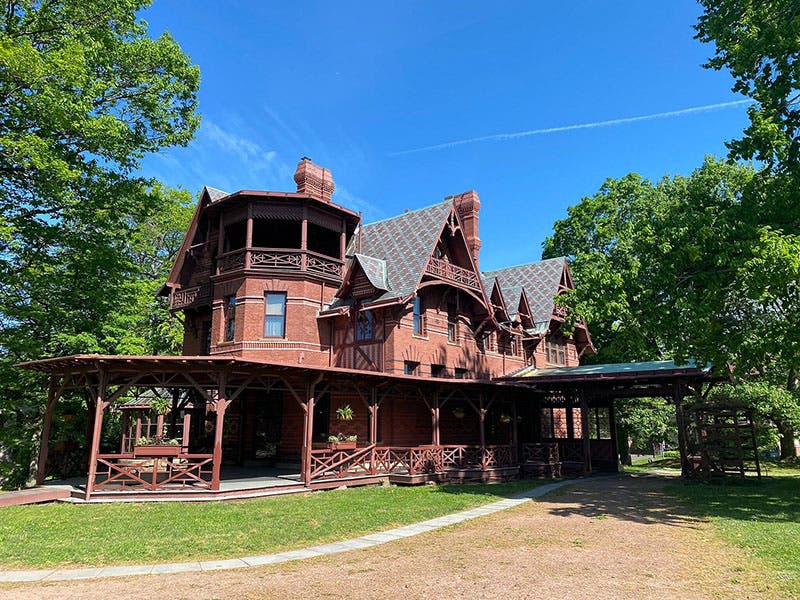
The Mark Twain House, Hartford, Conn., recent photo (tripadvisor.com)
Twain had been a human typesetter before his steam-boating days and had a keen interest in prinring, and in the possible automating of the principal expense for a printer, the conversion of words to printable type. Twain chose in the 1880s to back the typesetting machine of James W. Paige, who invented an incredibly complex device with some 18,000 parts that mechanically assembled pieces of type into frames for printing. The first one was completed in 1887, but it never really worked, requiring continuous intervention by the operator, which was not the idea. Only one other Paige compositor was ever built, in 1894, but it was recycled for metal during WWII, leaving only the original still surviving, which was added to the Mark Twain House Collection at some point. I would guess that the acquisition required the attention of a few structural engineers, since it weighs 9000 lbs. It wasn’t there when I used to visit, so I don’t know how they managed to accommodate it.
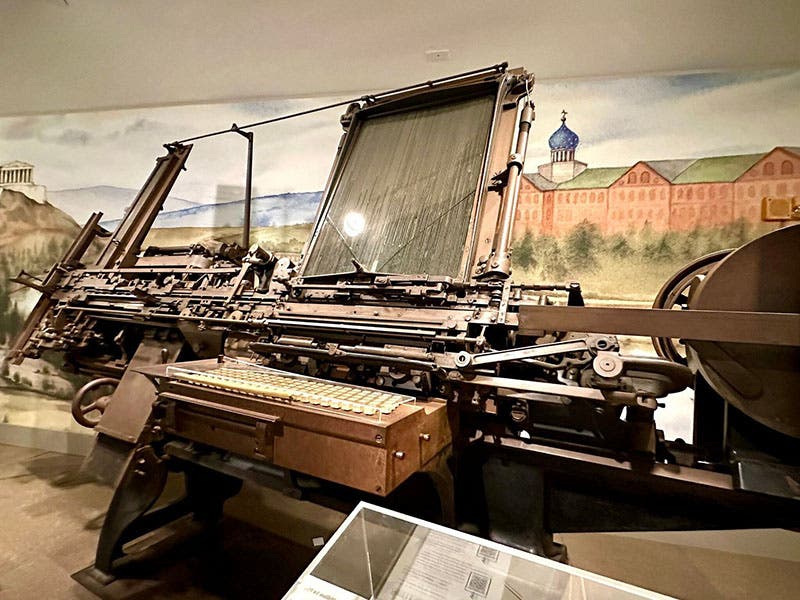
Paige compositor of 1887 on display at the Mark Twain House, Hartford, Conn. (tripadvisor.com)
Twain provided some $300,000 worth of financial support for the Paige compositor and lost it all. Had he put his money into Otto Merganthaler’s linotype machine, which was being developed at the same time, he would have made a fortune. Morgenthaler was smarter than Paige, and instead of mimicking a human compositor, with all his complicated motions, Morgenthaler invented a machine that actually cast type and recycled it in a way no human had ever done, and much more simply and cheaply.
To his credit, Twain, although he declared bankruptcy and had to sell his beloved house, eventually paid off all his creditors. But the financial bath he took, plus the deaths of his wife Livy (1904) and two of his three daughters (1896 and 1909), did nothing to improve the wit and humor of his writing.

Headstones for Mark Twain (right) and his wife Olivia (left), Woodlawn Cemetery, Elmira, N.Y. (Wikimedia commons)
After Comet Halley went by in 1910 and Twain died and was celebrated at a memorial service in New York City, he was laid to rest next to his wife in her family plot in Woodlawn Cemetery in Elmira, N.Y., marked by a small but hefty headstone (sixth image). I have read that the stone obelisk that stands to the side of the graves (not shown in most photos of the plot) was provided by Twain’s only surviving daughter, who ensured that it was exactly two fathoms (“mark twain”) tall, but I have been unable to confirm this.
In 1940, the U.S Postal Service issued a series of 5 stamps to commemorate worthy American authors. The series started with Washington Irving (1¢), and included James Fennimore Cooper (2¢), Ralph Waldo Emerson (3¢), Louisa May Alcott (5¢), and Clemens (10¢). The series did not include Harriet Beecher Stowe, who lived directly across the street from Twain in Hartford.

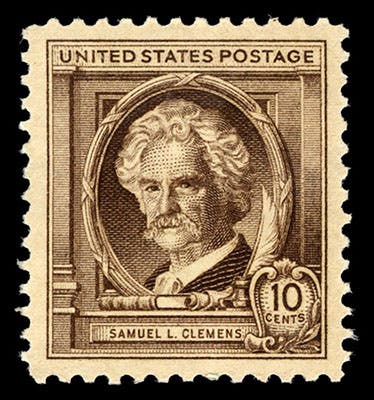
U.S. postage stamp commemorating Samuel L. Clemens (Mark Twain), 1940, National Postal Museum, Smithsonian Institution (postalmuseum.si.edu)
There is an informative video on the Mark Twain House YouTube channel that focuses on the Paige compositor; it is aimed at school kids, but the visuals are great. There is also a book on Twain's involvement with the publishing industry in Hartford and the quest for a typesetting machine: Printer's Devil: Mark Twain and the American Publishing Revolution, by Bruce Michelson (2006); we do not have a copy in the library, and I was unable to consult it.
As a final odd note, we point out that Twain's publishing house, Charles L. Webster & Co, established in 1884, which made great profits on its first two books, The Adventures of Huckleberry Finn (1885), and the Personal Memoirs of Ulysses S. Grant (1885), failed miserably with a publication of 1887, further precipitating Twain's financial collapse. The subject of the unsellable book? Yesterday's tongue-in-cheek Scientist of the Day, Pope Leo XIII.
William B. Ashworth, Jr., Consultant for the History of Science, Linda Hall Library and Associate Professor emeritus, Department of History, University of Missouri-Kansas City. Comments or corrections are welcome; please direct to ashworthw@umkc.edu.