Scientist of the Day - Albrecht Von Haller

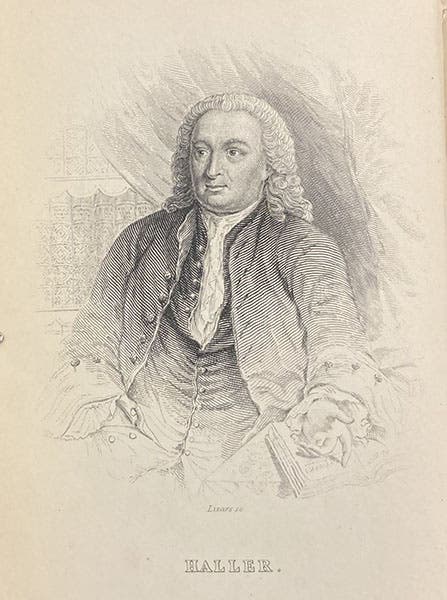
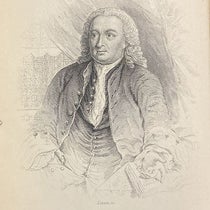
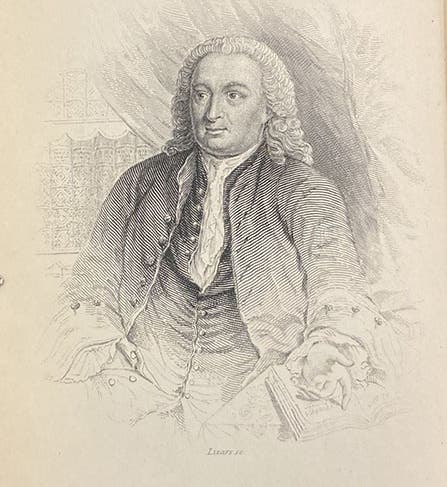
Portrait of Albrecht von Haller, engraved frontispiece by William Lizars, The Natural Arrangement and Relations of the Family of Flycatchers, by William Swainson, vol. 1, 1838 (The Linda Hall)
Albrecht Von Haller, a Swiss botanist, anatomist, and physiologist, was born in Bern on Oct. 26, 1708. He suffered from poor health his entire life, so he hit the books early, mastering a variety of languages and reading incessantly. He was drawn toward the medical sciences and studied anatomy and physiology at Tübingen and Leiden. He also loved collecting plants, acquiring a knowledge of botany that he would nourish his entire life.

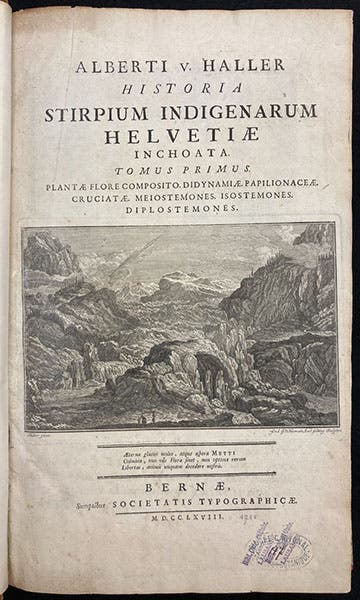
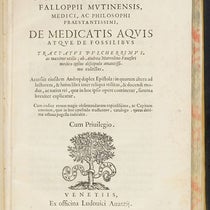
Title page with engraved vignette, Historia stirpium indigenarum Helvetiæ, by Albrecht von Haller, vol. 1, 1768 (The Linda Hall)
His reputation grew swiftly enough that when the University of Göttingen was founded in 1734 (it is hard to believe that such an esteemed university is 250 years younger than Tübingen and 350 years younger than Heidelberg), Haller was called to a professorship in anatomy, physiology, and botany, at just 38 years of age. He taught there until 1753, when he returned to Bern and his native Switzerland.

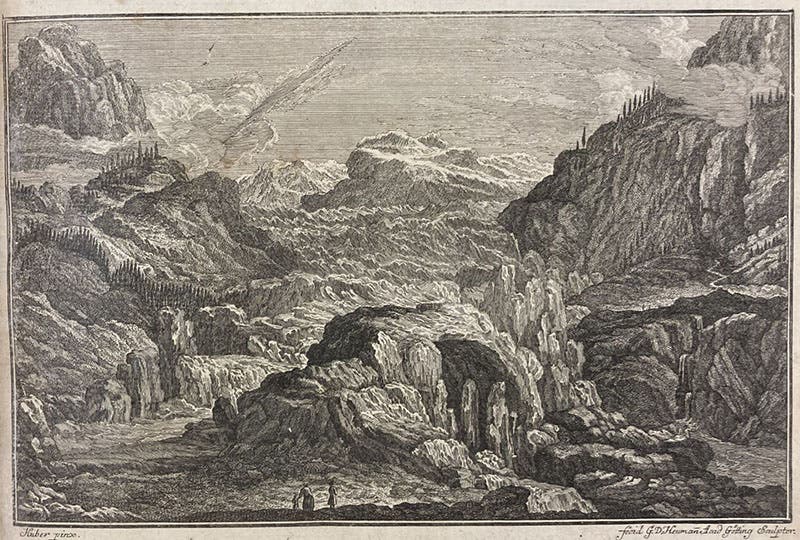
Engraved vignette, detail of title page, Historia stirpium indigenarum Helvetiæ, by Albrecht von Haller, vol. 1, 1768 (The Linda Hall)
Haller came to international attention when he wrote the prefaces for volumes 2 and 3 of the German edition of the Comte de Buffon's Natural History, the first 3 volumes of which were published in France in 1749. Haller was critical of Buffon's disinterest in classification, of his theory of degeneration as an explanation for species change, and of Buffon's theory of the earth, which Haller thought questionable in Christian terms. Haller would later attack many of the taxonomic decisions of Carl Linnaeus, the botanical authority in Uppsala. Since Buffon and Linnaeus would become the most famous naturalists in the world in the 1760s, that was a lot for Haller to take on, yet he held his own, and his stature seems to have grown with theirs, so that the three had a nearly equal reputation by 1770, which surprises many people who know of Buffon and Linnaeus and have never heard of Haller.

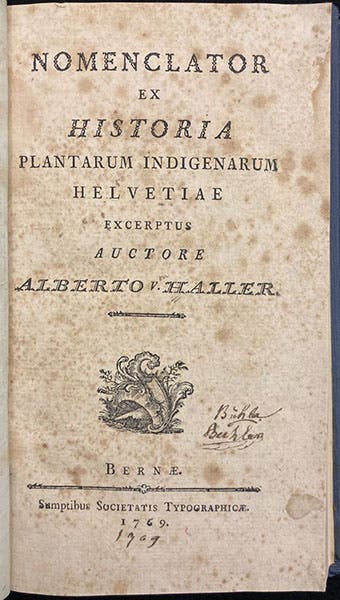
Title page, Nomenclator ex Historia plantarum indigenarum Helvetiae, by Albrecht von Haller, 1768 (The Linda Hall)
Haller's own work in the 1750s was in embryology and in generation, the term in use for the means by which traits were passed from parents to offspring. Most naturalists were preformationists until the mid-1740s, meaning that they thought the individual was preformed in either the egg or the sperm, and merely grew in gestation. The alternative was epigenesis, which had the individual develop from unformed matter, according to some sort of an organic plan. Epigenesis was a vitalistic theory, meaning it required some sort of non-material organic force, which did not appeal to those who wanted to explain everything mechanically.

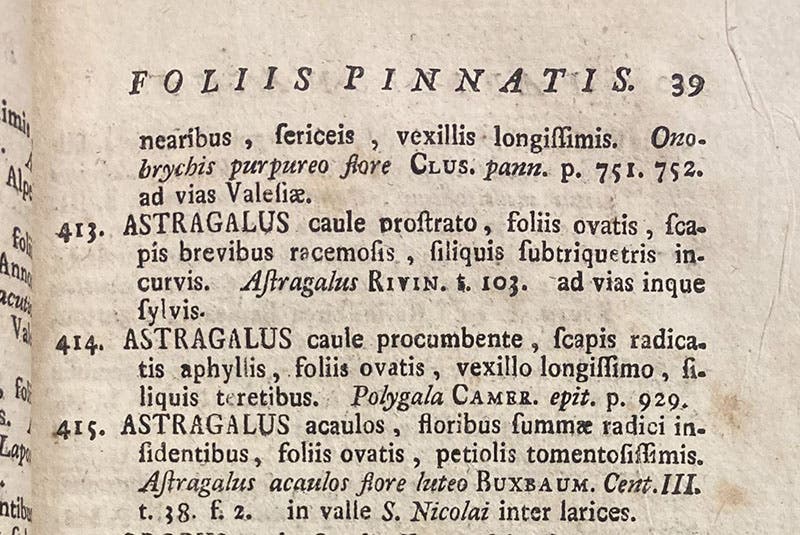
Names (not binomial) for various species of Astragalus, Nomenclator ex Historia plantarum indigenarum Helvetiae, by Albrecht von Haller, p. 39, 1768 (The Linda Hall)
When Abraham Trembley discovered in the 1740s that polyps (hydra) could regenerate after being cut in half, preformationists were threatened – how could an organism regenerate if there was no organic plan within? – and Haller, who started out as a preformationist, moved to epigenesis by 1750. But then he did a series of experiments on the development of the heart in chicken eggs, and he found he could detect the microscopic presence of the heart in embryonic development right from the beginning. He published an article on this in the Göttingen journal he edited in 1758, and became Europe’s most forceful advocate for preformation in the 1760s and 1770s . He was opposed by others, such as Caspar Wolff, who replaced him at Göttingen, but never deposed. Although he died in 1777, his influence in Germany continued through the end of the century, even as vitalism blossomed within German Romanticism.
In physiology, Haller was also known for his notion of "irritability " as an inherent property of organic matter. It was what made muscles twitch when you poked them, and was different from "sensibility," which involved nerves, and was also considered a vital force. Discussion of irritability and sensibility in German physiology will require another post.
In later life, after his return to Switzerland, Haller returned to botany, which we mention because most of our small Haller collection here at the library is botanical. His Historia stirpium indigenarum Helvetiæ (History of the Native Plants of Switzerland) is a beautiful book, 2 volumes in folio with a lovely title page vignette (second and third images). There are few illustrations in this or his much slighter Nomenclator ex Historia plantarum indigenarum Helvetiae, but plenty of plant names, and you soon realize that Haller totally rejected the artificial botanical system of Linnaeus, as well as his system of binomial nomenclature, which would soon take the botanical world by storm (fourth and fifth images).

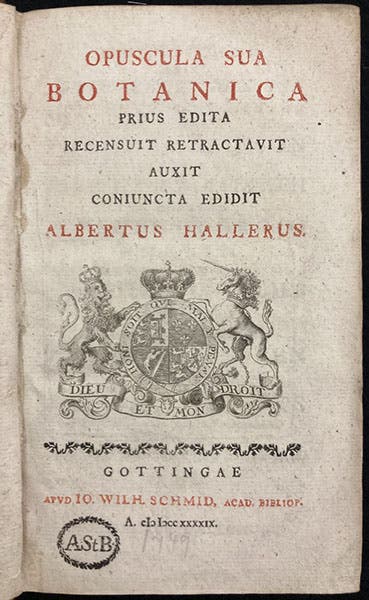
Title page, Opuscula sua botanica, by Albrecht Von Haller, 1749 (The Linda Hall)
Haller's greatest legacy may have been the life science departments at Göttingen, where many noted physiologists like Wolff took up professorships. Haller was in poor health from 1770 on and died in 1777. Sixty years later, the English naturalist William Jardine dedicated one of the volumes of his Naturalist's Library to Haller and included a substantial biographical preface and a frontispiece portrait, which we include here (first image). William Lizars, the engraver, did some of the early plates for John James Audubon’s Birds of America.

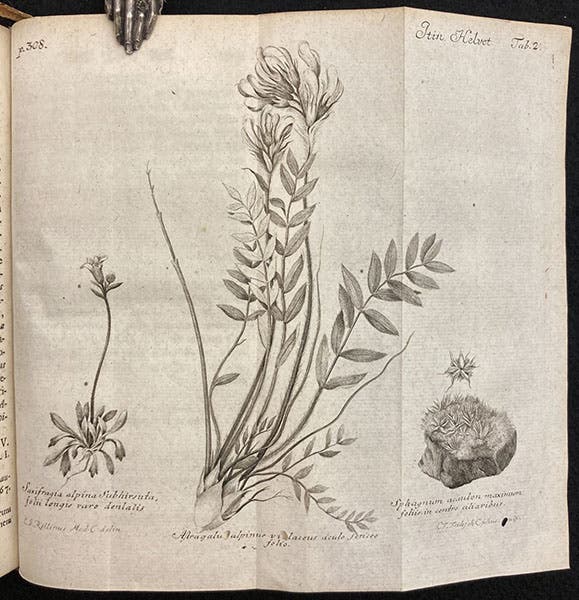
Astragalus alpina, Alpine Milkvetch, Opuscula sua botanica, by Albrecht Von Haller, p. 308, 1749 (The Linda Hall)
An earlier botanical work, Opuscula sua botanica, was published before Haller left Göttingen, and it does have quite a few folding plates of European plants. One of those is the Astragalus alpinus, or Alpine Milkvetch. Since the Astragalus in my yard is still in full bloom, in mid-October, I include Haller's plate of Astragalus as a final image.
William B. Ashworth, Jr., Consultant for the History of Science, Linda Hall Library and Associate Professor emeritus, Department of History, University of Missouri-Kansas City. Comments or corrections are welcome; please direct to ashworthw@umkc.edu.