Scientist of the Day - Mikhail Tsvet

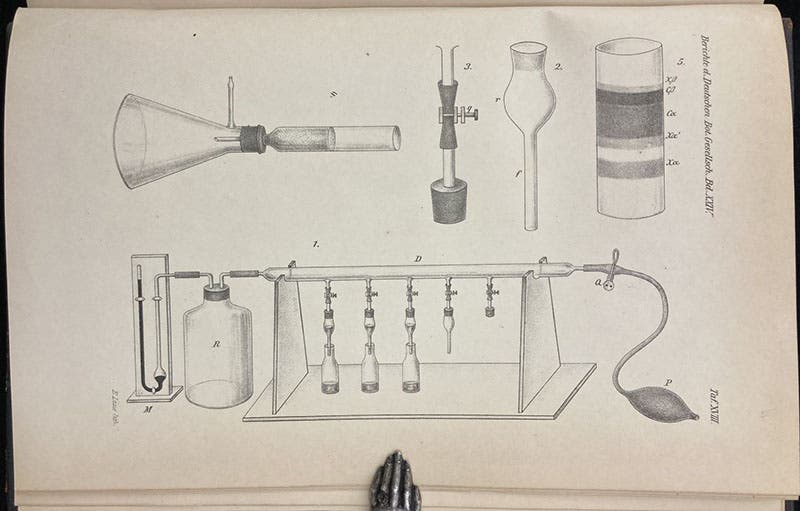
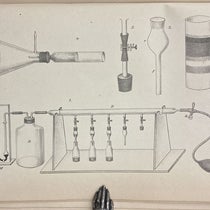
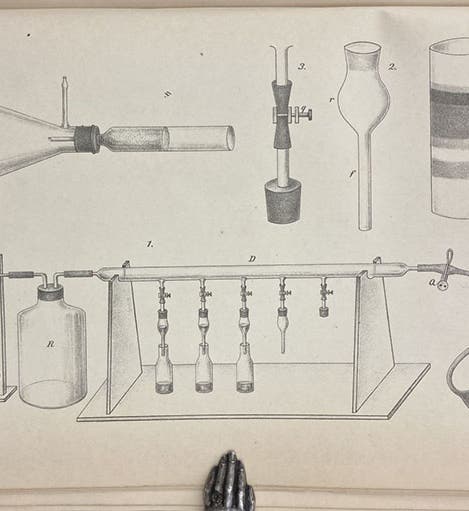
Drawing/diagam of Tsvet’s laboratory setup for his chromatography experiments on chlorophyll, to accompany “Adsorptionanalyse und chromatographische Methode,” by Mikhail Tsvet, Berichte der Deutschen Botanischen Gesellschaft, vol. 24, plate 18 at end, 1906 (Linda Hall Library)
Mikhail Tsvet, a Russian/Italian botanist, was born on May 14, 1872, in Asti, Italy. His mother was Italian and died when Tsvet was young; his father was a Russian diplomat who raised Mikhail in Geneva. Tsvet (often spelled Tswett and several other ways) was interested in plant physiology, and the mechanism of chlorophyll, and he earned a PhD in botany. When his father was recalled to Russia, Tsvet had to start over, as his Swiss degrees were not recognized in Russia.

Portrait of Mikhail Tsvet, photograph, unknown source, ca 1900 (Wikimedia commons)
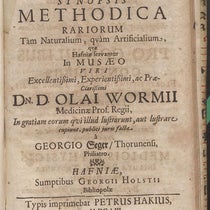
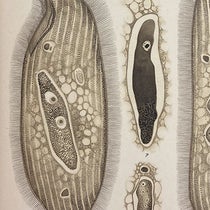
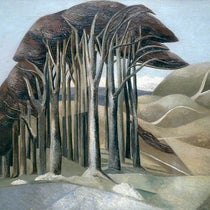
Beginning around 1900, in Warsaw, then part of Russia, Tsvet was looking for ways to separate plant pigments nondestructively. He found that if he dissolved the pigments in a combination of solvents, and then passed the solution through a column of ground calcium carbonate (chalk), the pigments would move at different rates through the column and separate into chlorophylls (green), carotenes (orange) and xanthrophylls (yellow). Tsvet called his separation method chromatography; he announced it at a meeting in 1903, and published his methods in 1906 in a pair of papers in the Berichte (Reports) of the German Botanical Society. The second paper used chromatography in the title for the first time (third image). The same paper included an appended diagram that shows a setup for column chromatography, and one fractionated column (in black and white; first image). We show a recent photograph of a modern chromatographic separation of plant pigments in our fourth image below.

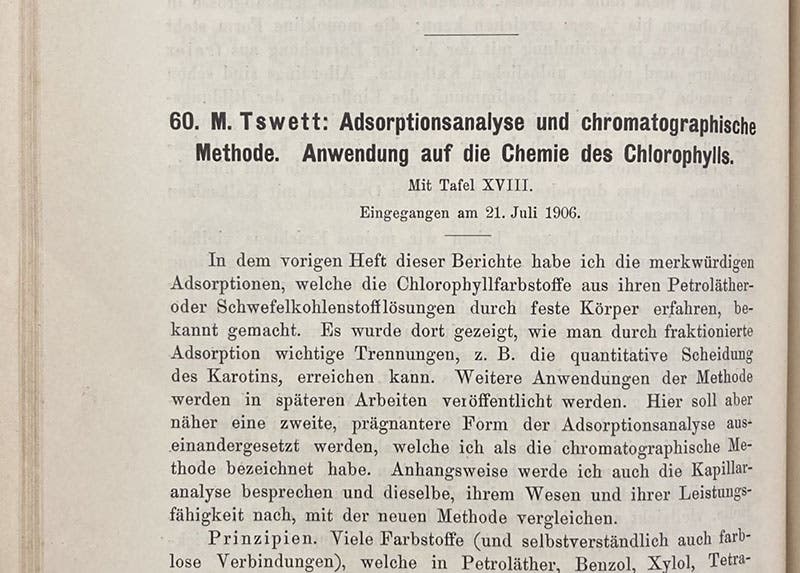
First paragraph, “Adsorptionanalyse und chromatographische Methode,” by Mikhail Tsvet, Berichte der Deutschen Botanischen Gesellschaft, vol. 24, p. 384, 1906 (Linda Hall Library)
Tsvet's discovery of chromatography has long attracted the attention of philosophers of science, because it was first rejected and then ignored by chemists for 25 years, until long after Tsvet had died (in 1919). Beginning in the 1930s, column chromatography was rediscovered, and many other chromatographic techniques were developed, such as paper and thin-layer chromatography, all of which could have been done in the 1910s, but wasn't.

A modern separation of plant pigments into chlorophylls (green), carotenes (orange) and xanthrophylls (yellow), by thin-layer chromatography (Wikimedia commons)
Various reasons for the prolonged rejection of Tsvet and chromatography have been proposed – he was a botanist and thus an outsider to chemists; he wrote in Russian (but his two 1906 papers were in German); his techniques did not conform to acceptable methods for plant chemists. None of this seems sufficient to explain why chemists resisted Tsvet and chromatography for so long. Because, as we now know, Tsvet was absolutely right, and chromatography is now indispensable for chemists in all sorts of fields. And if you look up chromatography in any reference source and search out the history section, it will begin with Tsvet. There are no real precursors.

Tombsone of Mikhail Tsvet, Alekseev-Akatov Monastery, Voronezh, Russia (Wikimedia commons)
It probably did not help that Tsvet developed health problems after 1912, and then came the Great War, which displaced Tsvet from Warsaw to Voronezh in European Russia, near Ukraine, where he died in 1919, only 47 years old. Surprisingly, he has a gleaming tombstone in Voronezh, which is probably of recent origin (last image).
William B. Ashworth, Jr., Consultant for the History of Science, Linda Hall Library and Associate Professor emeritus, Department of History, University of Missouri-Kansas City. Comments or corrections are welcome; please direct to ashworthw@umkc.edu.