Scientist of the Day - Najeeb Halaby

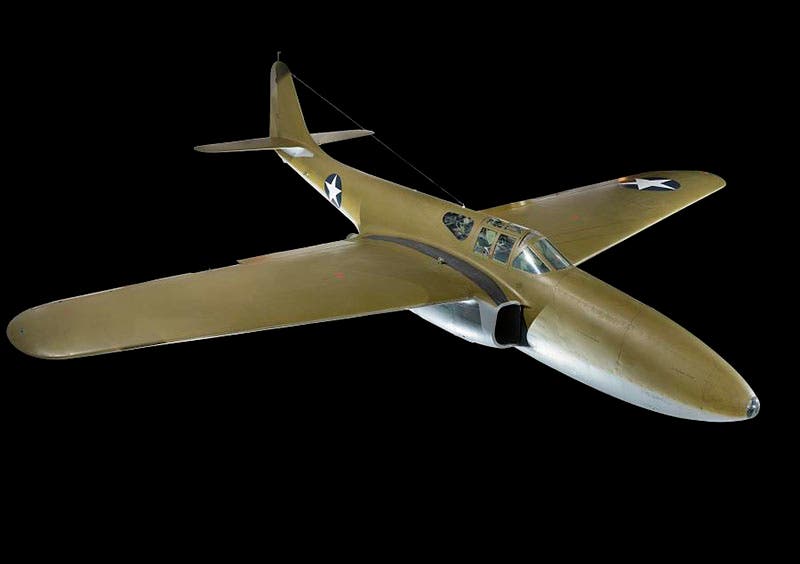
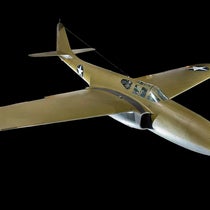
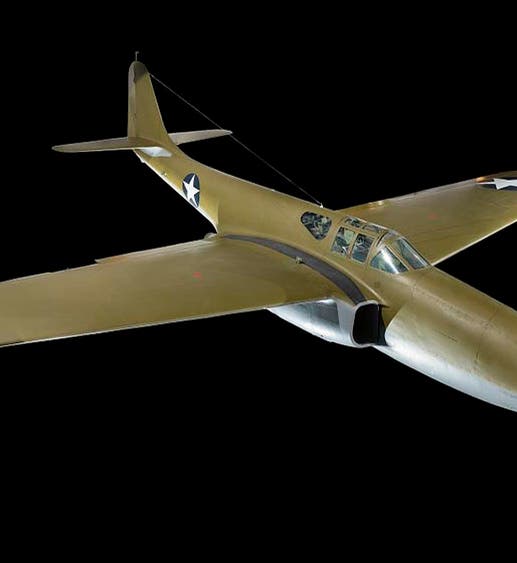
Bell XP-59 Airacomet, America’s first jet fighter, similar to the one that Najeeb Halaby flew to an altitude of 46,000 feet in 1943, National Air and Space Museum, Washington, D.C.
Najeeb Elias Halaby, Jr., an American test pilot, administrator, and airline executive, was born Nov. 19, 1915, in Dallas. His father was a Syrian/American businessman who died when Halaby was a boy. With means unknown to me, Halaby attended a prep school in Michigan, before heading off to Stanford, from which he graduated in 1937. Also before going to Stanford, he learned to fly. I am guessing the success of Charles Lindbergh had something to do with that aspiration.

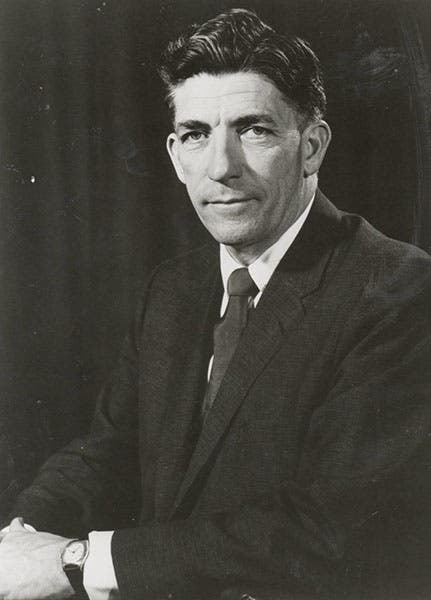
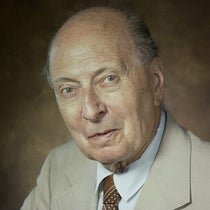
Portrait of Najeeb Haladay, undated photograph, Lone Star Flight Museum, Houston (lonestarflight.org)
Halaby then earned a law degree from Yale, just before the U.S. entered World War 2. He enlisted in the Navy, and his flying skills impressed someone, as he was chosen to be a Navy test pilot at their new test base and school in Patuxent, Maryland. When the first jet fighters were delivered in 1943, Bell YP-59 Airacomets, Halaby was one of those who put them through their paces. He was asked to take a P-59 as high as it would go, and he obliged, flying it straight up until it ran out of fuel at 46,000 feet, a world record at the time, and then having to coast it to a dead-stick landing. The first XP-59 ever made is on display in the National Air and Space Museum (NASM) in Washingon, D.C (first image).

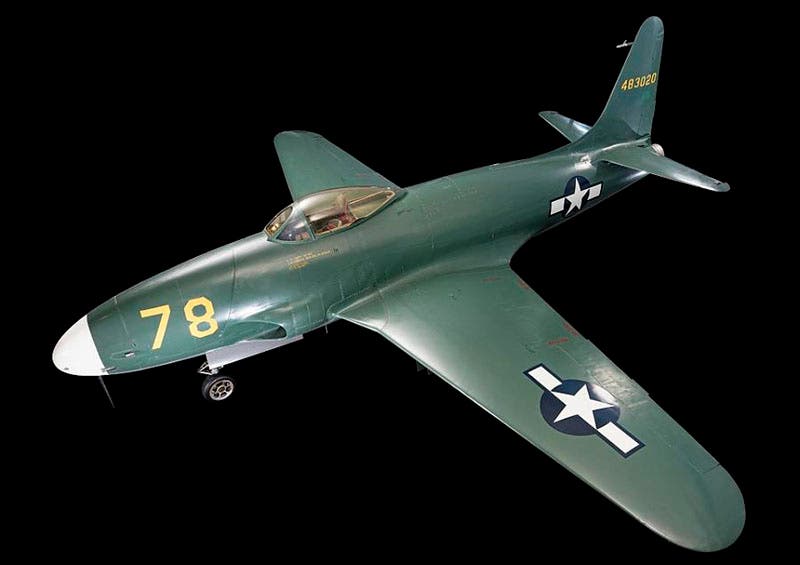
Lockheed XP-80 Shooting Star, like the one Halaby flew across country in May of 1945 on the first transcontinental jet flight; this specimen is in the National Air and Space Museum in Washington, D.C.
Two years later, in May of 1945, Halaby and the Navy had a new jet aircraft, the Lockheed P-80 Shooting Star, the first operational jet fighter for the U.S. Armed Forces (the P-59 was for testing and instruction only). Halaby took off from Muroc Air Base in California (now Edwards Air Force Base) in his YP-80 and flew across the country to Maryland in the first transcontinental jet flight ever. It was not nonstop – he had to land several times for kerosene, which was not easy to come by in quantity – but it was continuous, and he made the trip in just over five hours. Above is an XP-80 on display in the NASM (third image).

President John F. Kennedy watching as Najeeb Halaby is sworn in as Administrator of the Federal Aviation Agency, with Halaby’s mother present, Oval Office, White House, Washington, D.C, 1961 (Wikimedia commons)
After the War, Halaby continued as a test pilot at Muroc (where Chuck Yeager was also based), and he flew the new supersonic aircraft like the X-1, but he slowly moved into administrative and government work, advising the Department of Defense. In 1961, he was sworn in by President Kennedy as Administrator of the new Federal Aviation Agency (FAA). There are several photographs of the swearing-in, with his mother on hand, for some reason (fourth image).

Pan Am Boeing 747 in the air (Wikimedia commons)
Halaby was a strong advocate for large jet airliners – in fact, he wanted supersonic ones, before there was an SST. He got to do his part when he became president and CEO of Pan Am in 1969, and placed an order for 33 Boeing 747s, a billion dollars’ worth of aircraft, which made Pan Am king of the airways in the 1970s (fifth and sixth images).

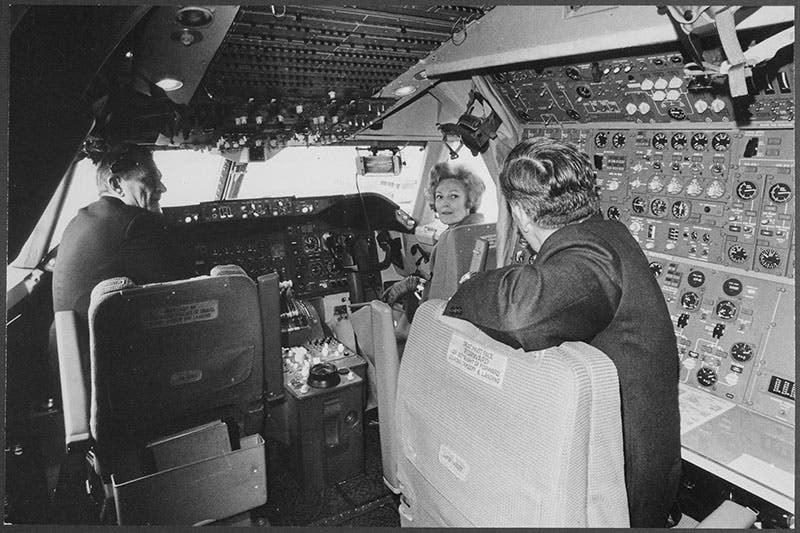
Najeeb Halaby (back to camera) in the cockpit of Pan Am’s first Boeing 747, with First Lady Pat Nixon in the co-pilot’s seat, photograph, 1970 (Wikimedia commons)
In 1979, the NASM held a symposium on the 40th anniversary of the first flight of a jet aircraft (in Germany in 1939). Many notable jet engine designers and pilots were there, such as Frank Whittle, Hans van Ohain, and Chuck Yeager, and so was Halaby, who talked about his days as a test pilot and the problems posed by the development of viable jet aircraft. The lectures and talks were printed up and published as The Jet Age: Forty Years of Jet Aviation (1979), with a Boeing 747 as a frontispiece (but a neutral one, without the Pan Am logo). We have a copy in our general collections, if you want to read Halaby's remarks. He also wrote an autobiography of sorts, Crosswinds, an Airman's Memoir (1978), but I was unable to locate a copy in time for this post.
Halaby's other contribution to world harmony was to marry off his oldest daughter, Lisa, to the King of Jordan, as she became Queen Noor to King Hussein in 1978; she has become a much more prominent world figure than her father. Halaby had nothing to do with arranging the marriage; the Queen met the King all on her own.
Halaby died on July 2, 2003, at the age of 87. The location of his grave is unknown.
William B. Ashworth, Jr., Consultant for the History of Science, Linda Hall Library and Associate Professor emeritus, Department of History, University of Missouri-Kansas City. Comments or corrections are welcome; please direct to ashworthw@umkc.edu.