Scientist of the Day - Percy Fawcett

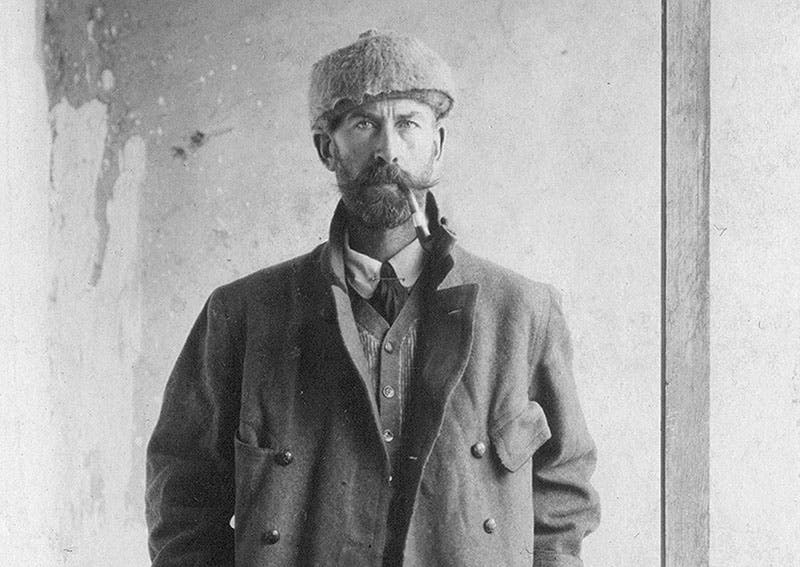
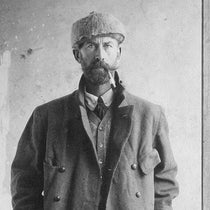
Portrait of Percy Fawcett, photograph, 1911 (torquaymuseum.org)
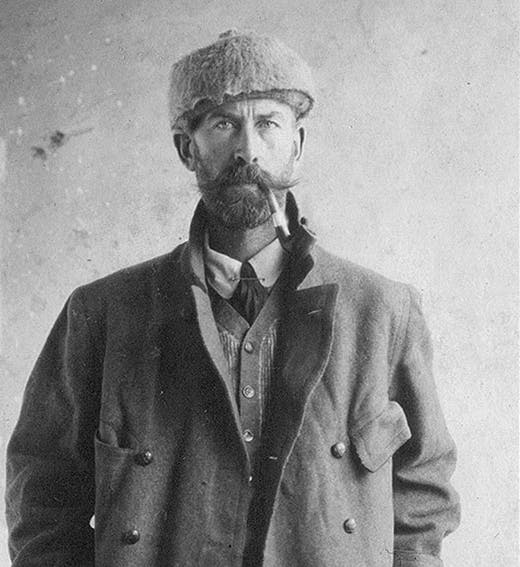
Percy Fawcett, an English Army officer and explorer, was born on Aug. 18, 1867, in Torquay, Devonshire. He attended the Military Academy at Woolwich and served as an artillery commander on several occasions. He studied surveying, became interested in geography, and joined the Royal Geographical Society (RGS) in 1901.

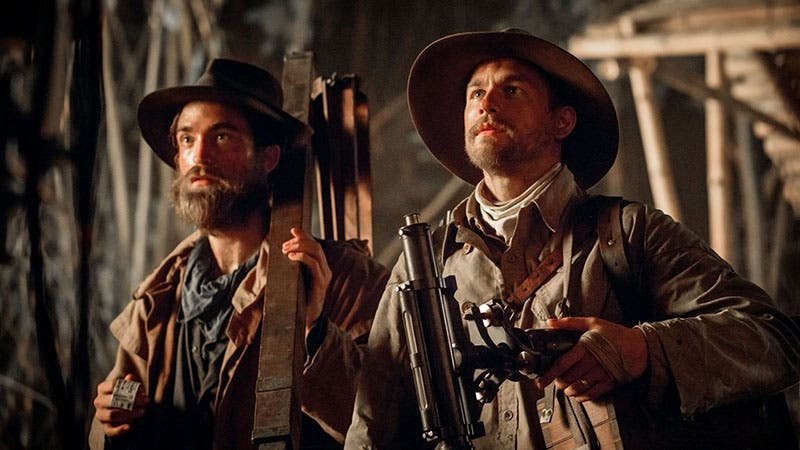
Percy Fawcett, played by Charlie Hunnam (right), with Henry Costin, who accompanied Fawcett on many expeditions, but not the last one, played by Robert Pattinson, still from the film, The Lost City of Z, directed by James Gray, 2016 (newyorker.com)
Fawcett made his first exploring expedition in 1906, to South America, mapping the border between Brazil and Bolivia, and would make many more, including a final one in 1925, from which he would not return. On one of his expeditions, he was accompanied by the biologist James Murray (not to be confused with marine biologist John Murray), who would later make the tardigrade everyone's favorite microscopic pet. Murray was unsuited to exploration in the tropics, frequently falling ill, and Fawcett had to dismiss him from the team, which caused some animosity back at the RGS.

Manuscript 512, an 18th-century document describing a “lost city” in Bahia, Brazil, which may have inspired Percy Fawcett, National Library of Brazil (Wikimedia commons)
Fawcett had become friends earlier with Arthur Conan Doyle, and one of Fawcett's expeditions into Bolivia, where there is an extensive high plateau, the Huanchaca Plateau, inspired Conan Doyle to write The Lost World (1912), in which an explorer, Professor Challenger of the RGS (not very much like Fawcett, alas) found prehistoric life, including dinosaurs, on the Huanchaca Plateau.

Map showing the location of the state of Mato Grosso within Brazil, where Fawcett searched for his Lost City in 1925 (Wikimedia commons)
Around this time (1913), Fawcett began to express interest in searching for a lost city In the state of Mato Grosso in Brazil. There was no real reason to think such a city existed, except for a single Brazilian manuscript of dubious authenticity that described such a place (with Greco-Roman architecture!), but it was supposed to be in Bahia, not Mato Grosso. Fawcett couldn’t pursue this new quest during World War I, when he served in the Royal Artillery, but after the War, he made several attempts to look for Z on his own, and then arranged a more elaborate search expedition, with his son Jack, and a third adventurer. They set out in 1925 and were last heard from in May of that year. Then, all three disappeared. Many people have tried to find out what happened to the three men, mostly by interviewing native tribes and looking for identifiable artifacts, but without conclusive results. They either ran out of food, succumbed to tropical fevers, or were killed by hostile natives.

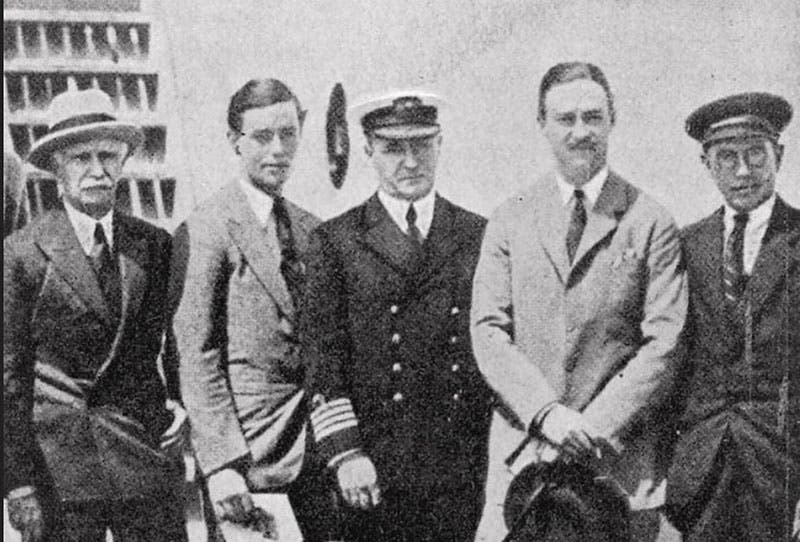
Percy Fawcett (second from right) and son Jack (second from left) on the way to Mato Grosso to search for the Lost City, photograph, 1925 (historyhit.com)
A book was published in 2009, The Lost City of Z, by David Grann, describing the author’s attempt to retrace Fawcett's final expedition, which inspired a film of the same title, directed by James Gray, in 2016 (in both woks, “Z” is pronounced Zed in the English manner). I toyed with the idea of rereading the book and/or rewatching the film to prepare for this post, but decided against it, since neither was especially historically accurate. In the film, Fawcett was played by Charlie Hunnam, who is far better looking than Fawcett ever was. I remember being put off by the portrayal of James Murray, in the film, as a bumbling, complaining, malicious addition to Fawcett's team, which I found hard to believe, and which cast doubt on the veracity of everything else. I also remember liking the film a lot, so it must have succeeded as an adventure story, even if it came up short as historical narrative (which it never claimed to be).
Fawcett is sometimes included with the likes of Richard Burton and David Livingstone on lists of eminent English explorers, but although he made many expeditions, he never really discovered anything, including lost cities. And he does not seem to have been the most pleasant of travel companions, nor was he much of a father to his three children (as explorers seldom are). It would be nice, however, to learn what happened to him. RIght now, there are no memorials to Fawcett anywhere. And the City of Z is still lost.
William B. Ashworth, Jr., Consultant for the History of Science, Linda Hall Library and Associate Professor emeritus, Department of History, University of Missouri-Kansas City. Comments or corrections are welcome; please direct to ashworthw@umkc.edu.