Scientist of the Day - Leland W. Sprinkle
.jpg#/media/File:Luray_Caverns,_Virginia_(19770925568).jpg)
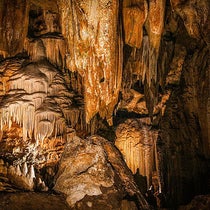
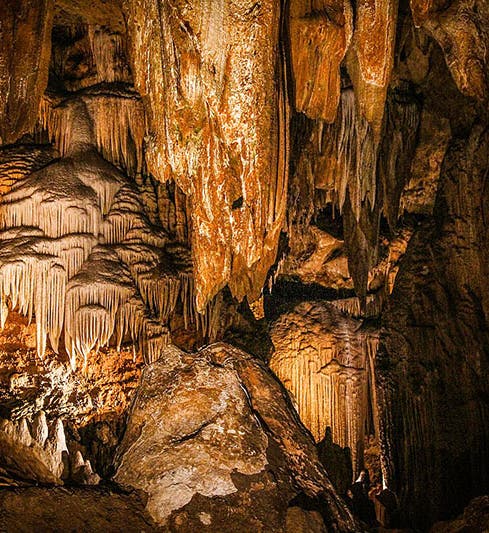
Titania’s Veil, a stalactite formation in Luray Caverns, Virginia (Wikimedia commons)
Leland W. Sprinkle. an American engineer and organist, was born on Aug. 13, 1908. Not much is known about Sprinkle’s early life, except that his plans for a Harvard PhD in physics were derailed by the Depression, and that he worked at various engineering-type jobs for a decade (and learned to play the organ), until a chance visit, about 1954, to the Luray Caverns in northern Virginia.
.jpg#/media/File:Stalacpipe_Organ_booth_at_Luray_Caverns_(2012-03-24_19.25.14_by_Jon_Callas).jpg)
Console for the Great Stalacpipe Organ, Luray Caverns, Virginia (Wikimedia commons)
Luray Caverns is probably the most stalactite-rich set of caves in the entire country (first image), and has been privately owned (by the same family) since the 19th century. For tourists, the guides often used to pull out little rubber mallets and play tunes on the stalactites. Sprinkle saw one of these performances, and his engineering and organ-playing background, to say nothing of his native ingenuity, which was considerable, immediately kicked in, and he imagined a giant stalactite organ powered, or perhaps empowered, by an organ keyboard. Leland went home and worked out some of the details, and then returned for a meeting with the owner, Ted Graves, to whom he pitched his idea. Perhaps tourism was down, for Graves said, why not?

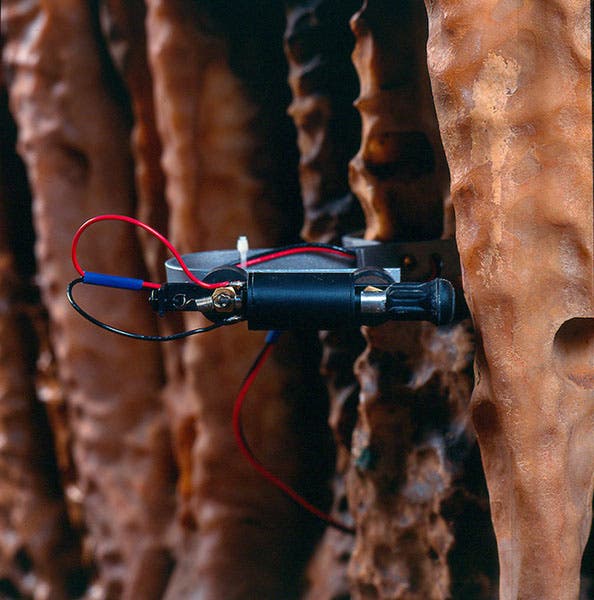
One of the 37 solenoids for the Great Stalacpipe Organ, which, when actuated from the console, gently strikes a stalactite with a rubber mallet (sonicscoop.com)
It took Sprinkle a few years to implement his plan; some say the Great Stalacpipe Organ opened in 1957, some say 1959. Sprinkle had to commission an organ console, and he had to figure out how to automate the rubber-hammer-striking process. He designed solenoids (electromagnets) that when actuated from the keyboard, would gently strike a designated stalactite. Finding stalactites of the proper pitch was probably the hardest part. His selections were spread out over 3.5 acres, all connected by wires to the console. Most of the stalactites had to be "tuned," which Sprinkle did with an electric grinder, a recourse that would have gotten him thrown out of any national park and banned for life. But he was on private property, working for an owner who trusted his judgement, and the tuning was accomplished. When he was done, Sprinkle could sit at his console, play a passage on the keyboard, and an ethereal response filled the caverns. He had created the world's largest musical instrument.

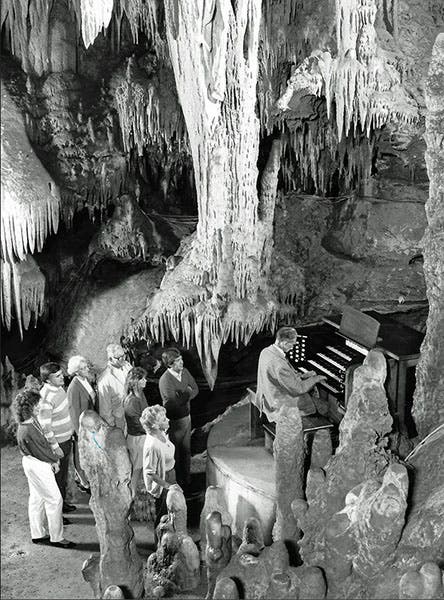
Leland W. Sprinkle playing the Great Stalacpipe Organ, Luray Caverns, Virginia, undated photograph (luraycaverns.com)
As you can tell from the custom-built console (second image), with its many tiers of keys and drawbars, Sprinkle had grand plans in mind. He envisioned echo and response stalactite choirs, where a melody from one cavern would be echoed from another, but it was eventually decided to electrically amplify the vibrating stalactites, so that, in the end, there were only 37 notes, but that was plenty.

Bronze plaque honoring Leland W. Sprinkle, Luray Caverns, Virginia (Wikimedia commons)
Sprinkle played the organ for tourists until his retirement in 1986, and he also devised a player-piano feature that would play music automatically when he wasn't there. There was plenty of maintenance to do, as the damp cave environment was hard on the electrics and electronics. Sprinkle trained young assistants to take over, and they did well, for the organ still functions and still delights tourists, who often come there just for the music.

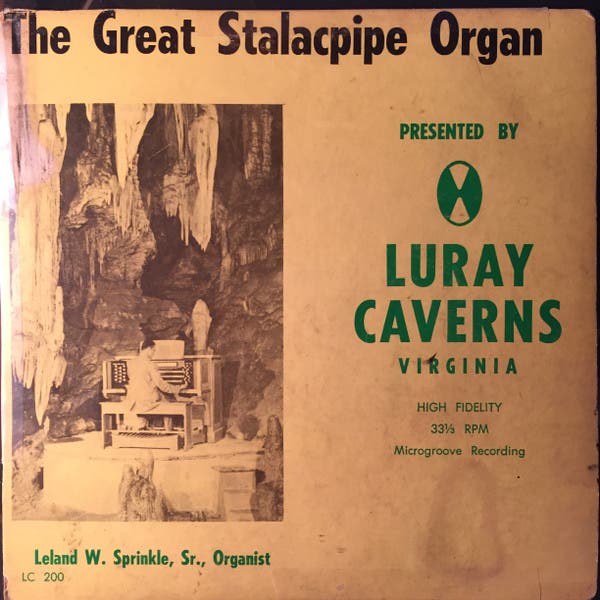
Record sleeve for a 7” LP of Leland W. Sprinkle, playing the Great Stalacpipe Organ, 1971, with a photo of Sprinkle on the sleeve (discogs.com)
Sprinkle made several recordings at the keyboard of the Great Stalacpipe Organ (sixth image), which you can find occasionally on eBay. I have not bought one, which is strange, for it is exactly my kind of thing.

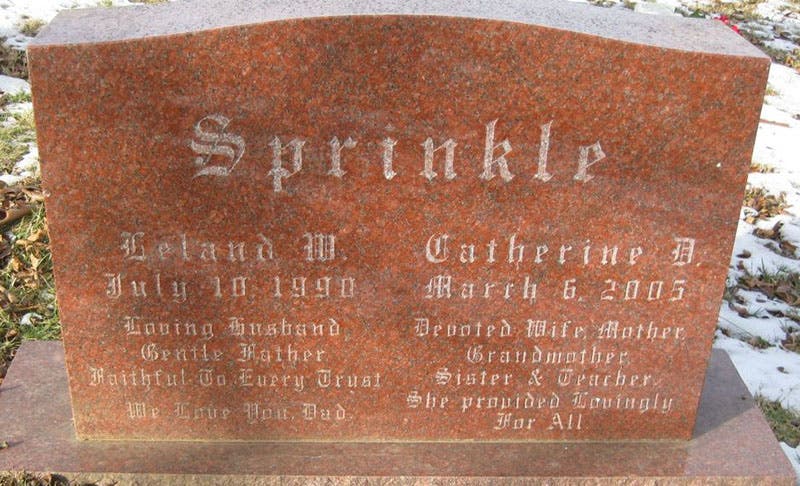
Tombstone of Leland W. Sprinkle and his wife, Beahm's Chapel Cemetery, Luray, Page County, Virginia, USA
In 2017, on the 60th anniversary of Sprinkle's invention, PBS News ran a 3-minute special on the organ, and since the link is still good after 9 years, it seems reasonable to think it might stick around; you can view it here.
Sprinkle died on July 10, 1990, and is buried in Luray (last image).
William B. Ashworth, Jr., Consultant for the History of Science, Linda Hall Library and Associate Professor emeritus, Department of History, University of Missouri-Kansas City. Comments or corrections are welcome; please direct to ashworthw@umkc.edu.