Scientist of the Day - Peter Johann Windler

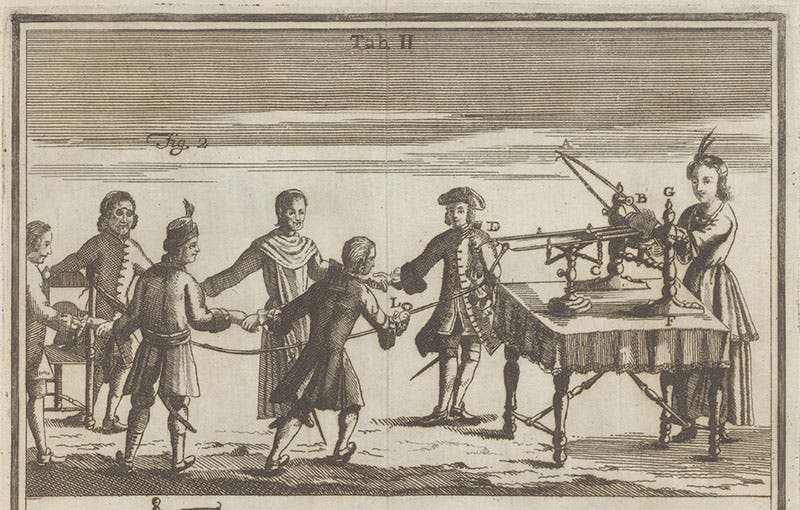
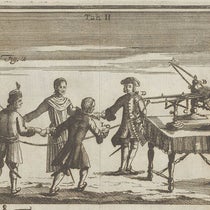
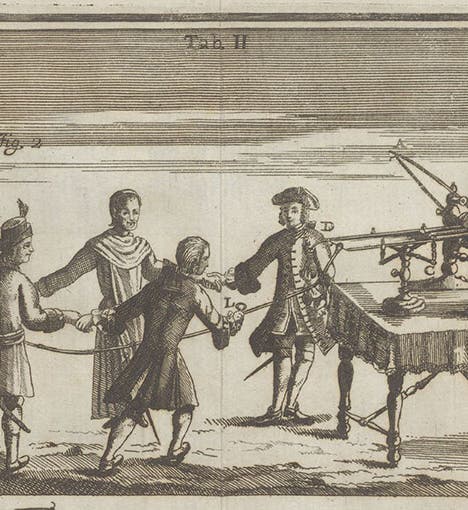
Volunteers joined in a circle to an electrical generator, being operated by Maria Angela Ardinghelli, detail of second engraved plate, Tentamina de causa electricitatis, by Peter Johann Windler, 1747 (Linda Hall Library)
Peter Johann Windler was a German electrical experimenter whose life seems to be mostly undocumented. There is no entry in the English Wikipedia, or the German. His birth and death dates are unknown; no portrait survives. We know about only one year in his life, and that is the year he spent in Naples in 1747. For that, we have descriptions and pictures, as they appeared in his book, Tentamina de causa electricitatis (Experiments on the Cause of Electricity, 1747). We have this book in our collections.

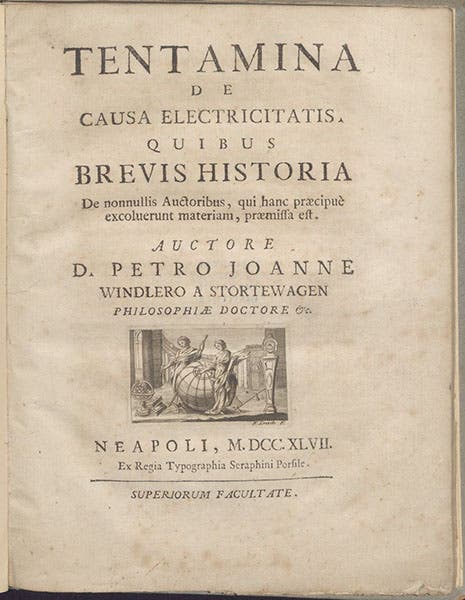
Title page, Tentamina de causa electricitatis, by Peter Johann Windler, 1747 (Linda Hall Library)
We learn from the Tentamina that Windler had been performing electrical demonstrations in Rome and was invited in 1747 to do so in Naples, at the palace of Ferdinando Spinelli, the Prince of Tarsia. These demonstrations, to which the public was apparently invited, were excitingly popular, and mostly involved connecting chains of people to an electrical machine and drawing sparks from their fingertips, or, should any attempt to kiss, from their lips.

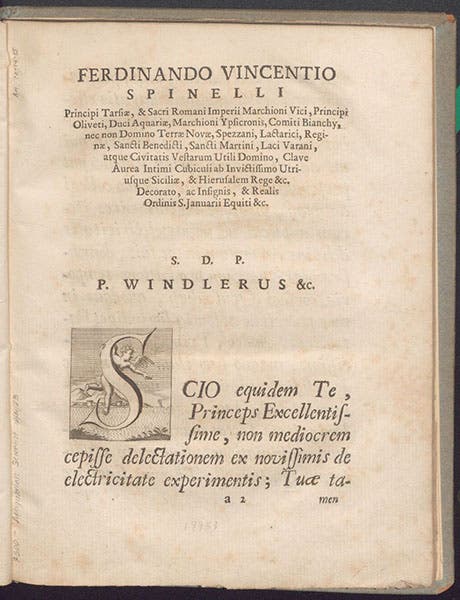
Dedication to Ferdinando Spinelli, Tentamina de causa electricitatis, by Peter Johann Windler, 1747 (Linda Hall Library)
Assisting Windler was an Italian electrical investigator and priest, Giovanni Maria della Torre, and a remarkable young 19-year-old woman, Maria Angela Ardinghelli.
Windler, after his successful year in Naples, moved on and into obscurity, but he left his notes with Della Torre, who compiled them into a book, commissioned two engravings for inclusion, and found a Neapolitan printer. We show both engravings here. They are of interest to scholars who study the history of women in science, for both show Ardinghelli taking an active role in the public demonstrations. Della Torre also included himself in the first engraving, looking right at the viewer from behind the electrostatic generator (fourth image).

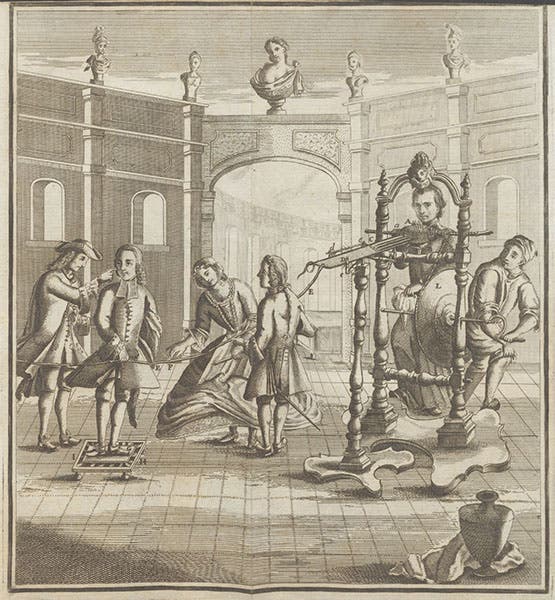
Volunteers joined in a circle to an electrical generator, with Maria Angela Ardinghelli at the center of the circle and Giovanni Maria della Torre operating the generator, engraved plate 1, Tentamina de causa electricitatis, by Peter Johann Windler, 1747 (Linda Hall Library)
We know a lot more about both Ardinghelli and Della Torre than we do about Windler, and now that we have introduced them, each will be scheduled for a post, although we would like to add a copy of Ardinghelli’s Italian translation of Stephen Hales’ Vegetable Staticks before writing her post. We already have three of Della Torre’s books on the eruption of Mount Vesuvius, so we could do him anytime

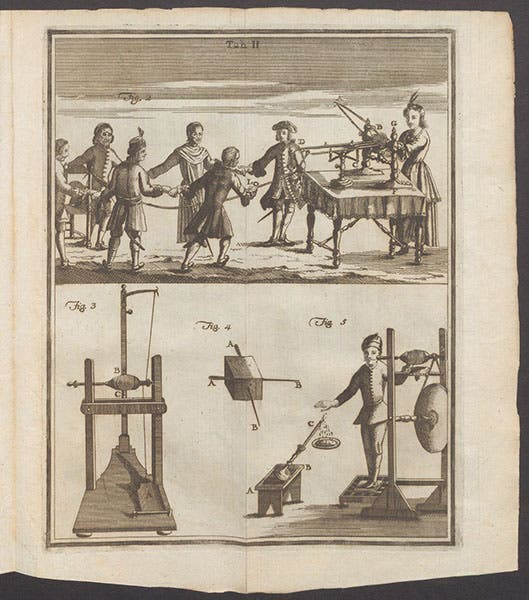
Volunteers joined in a circle to an electrical generator, operated by Maria Angela Ardinghelli, entire plate, Tentamina de causa electricitatis, by Peter Johann Windler, 1747 (Linda Hall Library)
Should you need a refresher course on the state of electrical science in the late 1740’s, we have published posts on Johann Winkler (1744); Jean-Antoine Nollet (1746); Pieter van Musschenbroek (1746); and William Watson (1745-50).
William B. Ashworth, Jr., Consultant for the History of Science, Linda Hall Library and Associate Professor emeritus, Department of History, University of Missouri-Kansas City. Comments or corrections are welcome; please direct to ashworthw@umkc.edu.