Scientist of the Day - Artur Hazelius

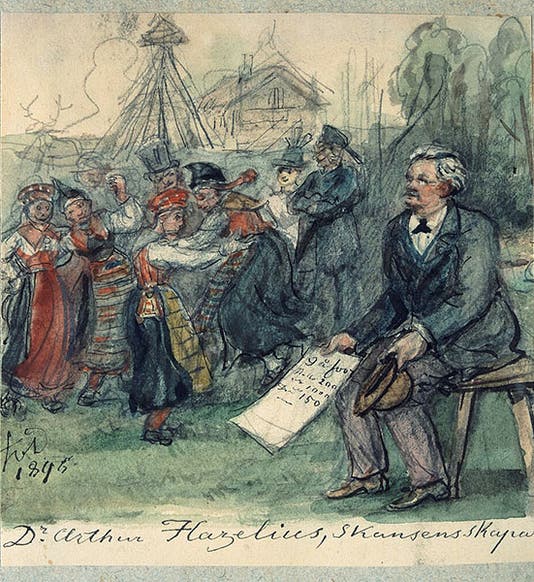
Portrait of Artur Hazelius, watercolor by Fritz von Dardel, 1896, Skansen (Wikimedia commons)
Artur Hazelius, a Swedish anthropologist and ethnological collector, died May 27, 1901, at the age of 67. He was born in Stockholm in 1833, studied at Uppsala University, and then taught for some years and served on several commissions for spelling reforms for the Swedish language, but around 1870, he and his wife Sofia began to collect folk objects – carvings, dolls, peasant dresses – from rural communities in Scandinavia, and by 1872 they had decided to establish a museum to display ethnological artifacts and handiwork. They opened such a museum in Stockholm, originally called the Scandinavian-Ethnographic Collection (second image), which eventually morphed into the Nordic Museum (Nordiska Museet, 1881), on the island of Djurgården in the middle of Stockholm. They found that villages around Sweden and Norway (which was then a unified country) were more than happy to give them handmade tools, pottery, toys, and even entire farms and shops.

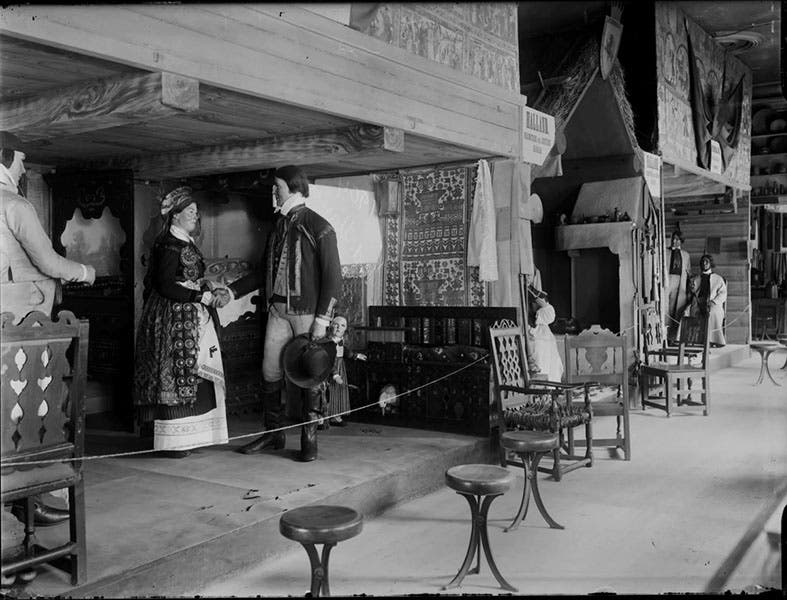
Interior displays at the Scandinavian-Ethnographic Collection, predecessor of the Nordic Museum, Stockholm, 1873 (nordiskamuseet.se)

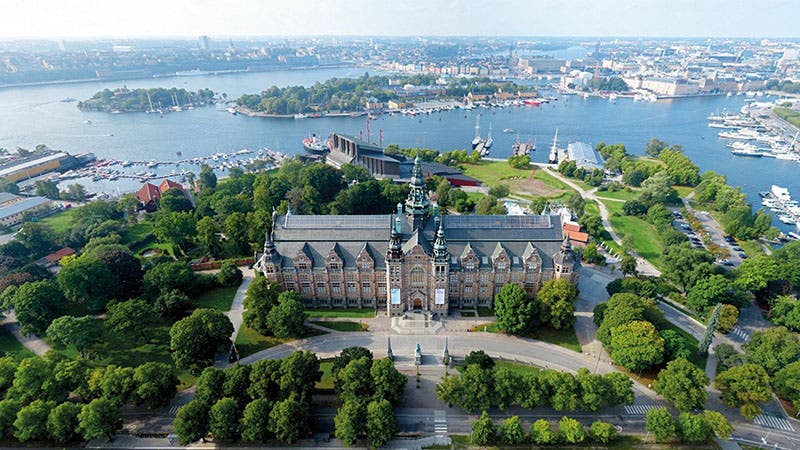
Aerial view of the Nordic Museum, completed in 1907, Djurgården, Stockholm (tripadvisor.com)
Hazelius began planning a new building, a grand edifice indeed, for the Nordic Museum. Ground was broken in 1888, and the building was finally finished and opened to the public in 1907, and is still there and still open to the public (third image). Objects on display, acquired by Hazelius, include a handwoven red skirt fom Dalana (accession no. 1, fourth image), various portrait medals of such as Carl Linnaeus (fifth image), and Pehr Geoge Scheutz's difference engine no. 1, which we discussed just last week (post of May 22, 2026, sixth image).

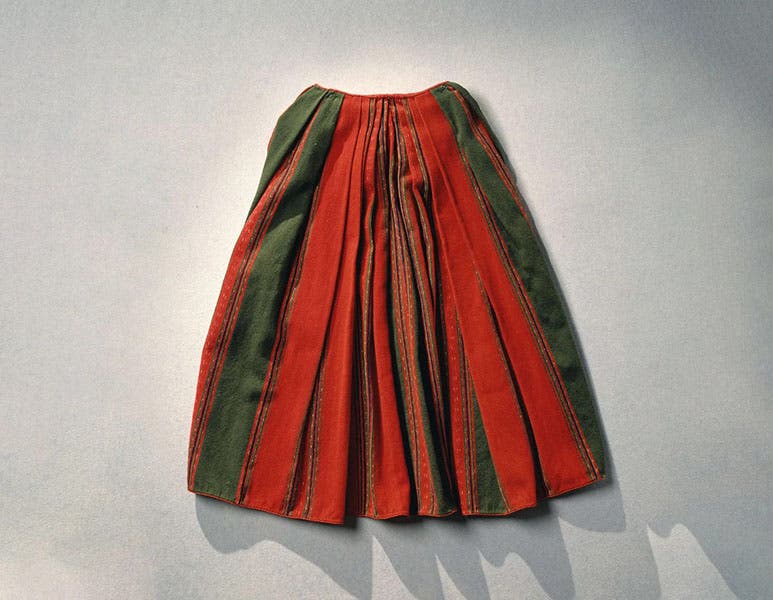
First object acquired for the Nordic Museum, a hand-woven Dalana skirt, 1872 (nordiskamuseet.se)

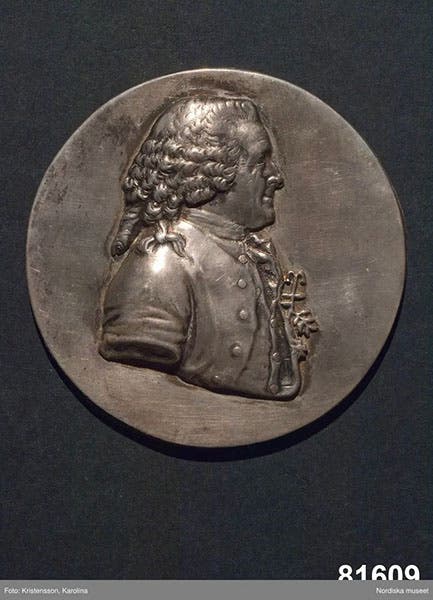
Portrait medal of Carl Linnaeus, Nordic Museum, Stockholm (digitaltmuseum.se)

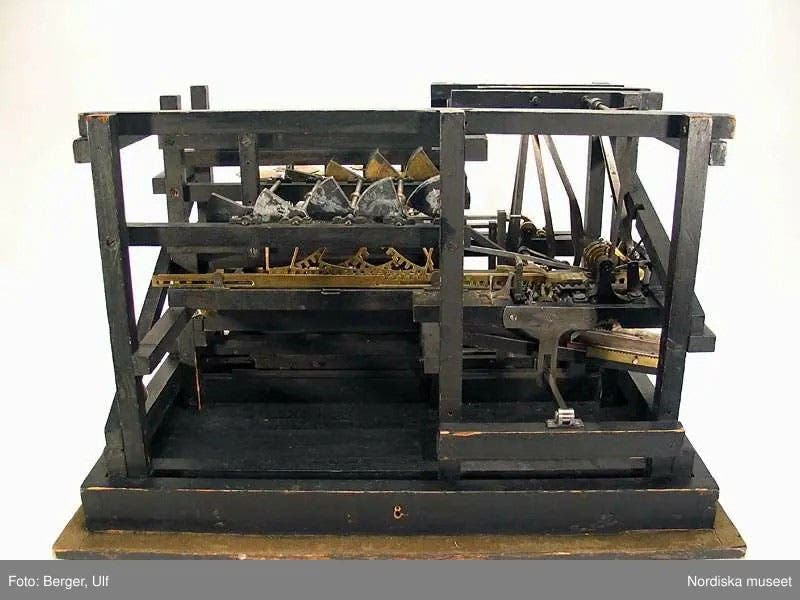
First difference engine of 1843, built by Pehr Georg and Edvard Scheutz, Nordic Museum, Stockhom (digitaltmuseum.se)
To display all the farmsteads, stores, smithies, and cider-presses he had acquired or been given, Hazelius decided to set up an open-air museum on the same island of Djurgården, having seen such a museum in Oslo, and he called his second museum Skansen. It opened in 1891, originally part of the Nordic Museum, and now a separate institution (seventh image). It is the most successful open-air museum in the world and was the model for such American living-history museums as Sturbridge Village in Massachusetts and Colonial Williamsburg in Virginia. We show here a Sámi dwelling and storage unit you can visit in Skansen (eighth image). From the beginning, Skansen also had an assortment of living wild animals, at first those native to Scandinavia, such as moose and bear, but now expanded into a world zoo.

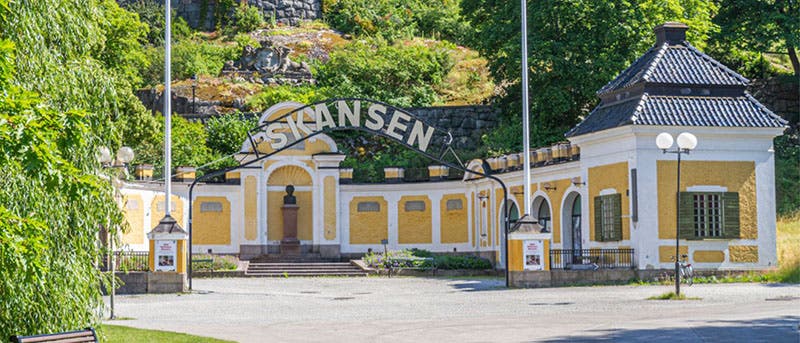
Entrance to Skansen, Djurgården, Stockholm (stockholmresilience.org)

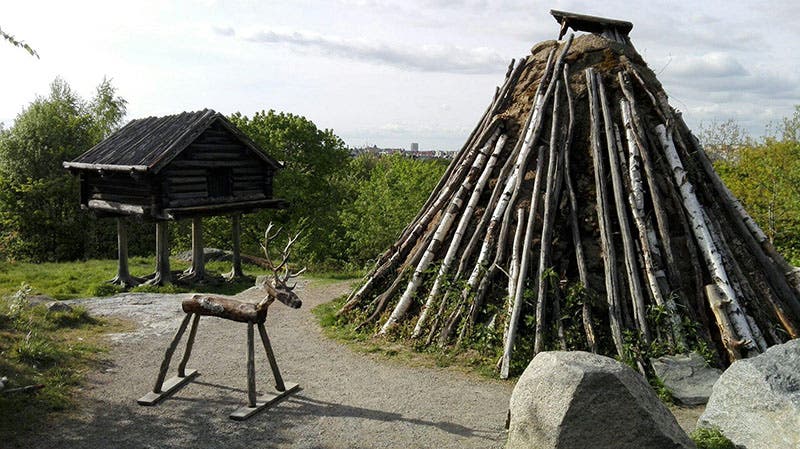
Sámi dwelling and storage shelter, outdoor display, Skansen, Stockholm (tripadvisor.com)
The house in which Hazelius was born, itself an ethnic artifact, was moved to Skansen in the 1890s, and I believe Hazelius lived there for the last few years of his life. He did not live long enough to see his grand building for the Nordic Museum finished and opened to the public. But his house at Skansen is still there and open to visitors (ninth image).

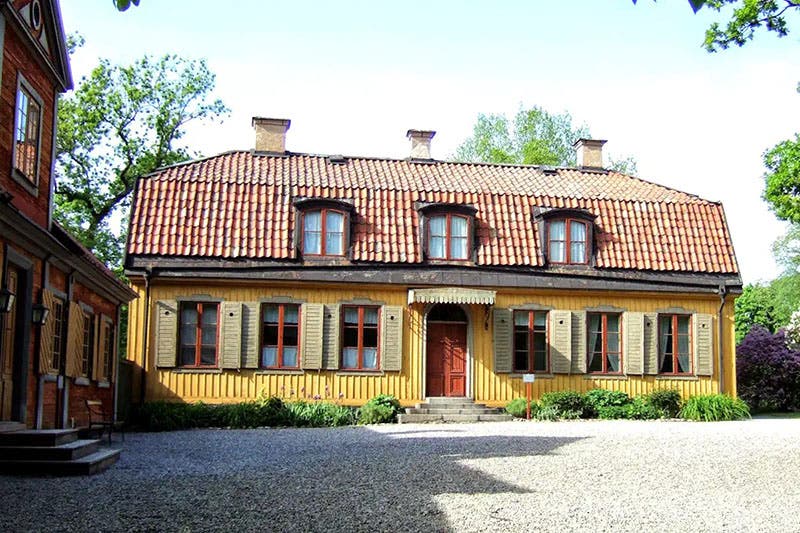
Birthhouse of founder Artur Hazelius, now moved to and on display at Skansen, Stockholm (stockholmmuseum.com)
There is a painted portrait of Hazelius that is featured in most biographies, but as it is posthumous and painted from a photograph, I prefer a watercolor drawn from life in 1896, with Hazelius seated at the right (first image).
William B. Ashworth, Jr., Consultant for the History of Science, Linda Hall Library and Associate Professor emeritus, Department of History, University of Missouri-Kansas City. Comments or corrections are welcome; please direct to ashworthw@umkc.edu.