Scientist of the Day - David Dale Owen

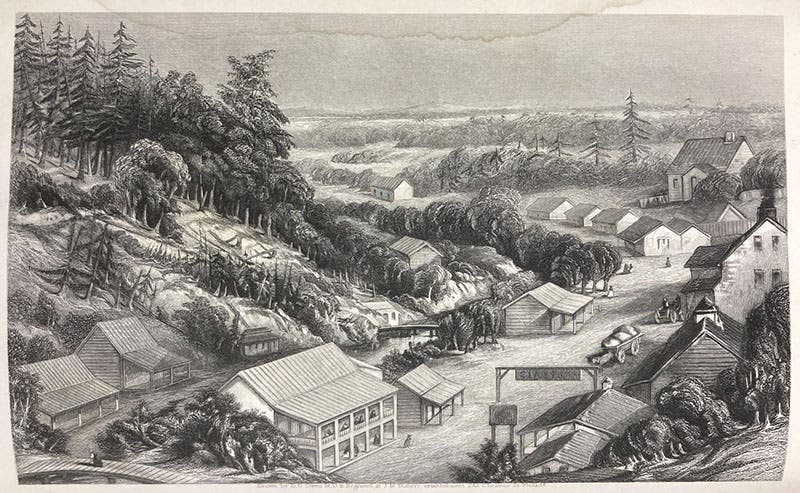
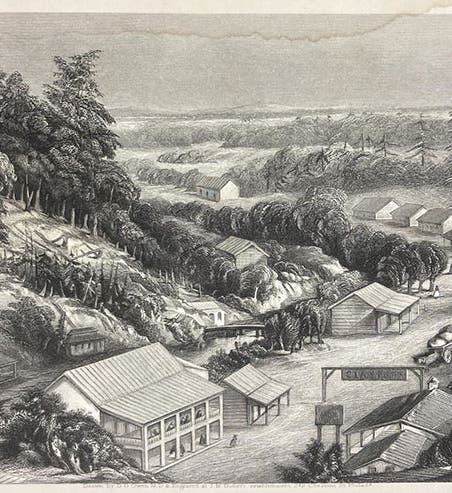
“View of the Hot Springs of Arkansas,” wood-engraved frontispiece, Second Report of a Geological Reconnoissance … of Arkansas, by David Dale Owen, 1860 (Linda Hall Library)
David Dale Owen, a Scottish/American geologist, was born June 24, 1807, in New Lanark, Scotland, southeast of Glasgow. New Lanark was a planned mill town, built by David Dale, the father-in-law of Robert Owen, our geologist's father, who would found the Utopian community, New Harmony, Indiana, in 1825. Those two introductory sentences pretty much explain how David Dale Owen got his name, and how he came to the United States.

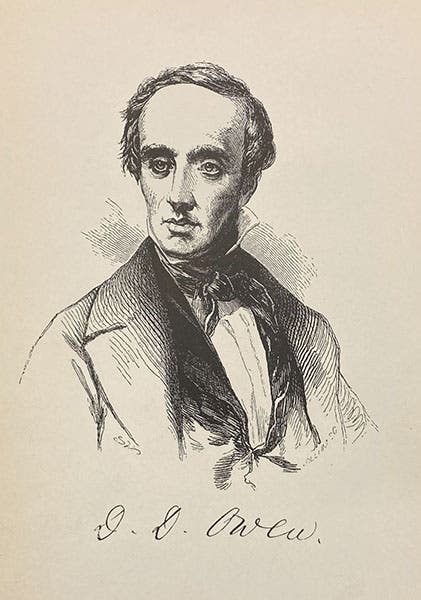
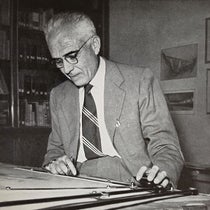
Portrait of David Dale Owen, frontispiece, David Dale Owen: Pioneer Geologist of the Middle West, by Walter B. Hendrickson, 1943 (Linda Hall Library)
Owen studied in Switzerland and at the University of London, where he must have acquired some background in natural history and geology, because in 1837, back in New Harmony, he accepted an offer from the Indiana legislature to become state geologist and conduct a geological survey of the state.

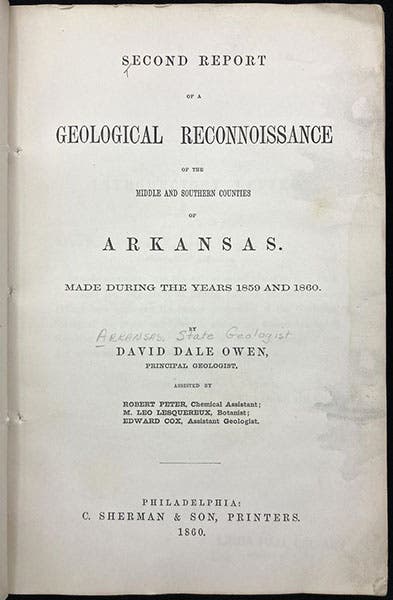
Title page, Second Report of a Geological Reconnoissance … of Arkansas, by David Dale Owen. 1860 (Linda Hall Library)
Over the next 22 years, Owen would become the appointed geologist of 3 states (Indiana, Kentucky, Arkansas), and conduct geological surveys of 3 more (Iowa, Wisconsin, Minnesota). He published official reports for most of these, many of which we have in our Library. We show the frontispiece (Hot Springs) for the second survey of Arkansas (1860; first image), and a hand-colored engraving of a river view (fourth image), both made after drawings that Owen did himself. He was a gifted artist.

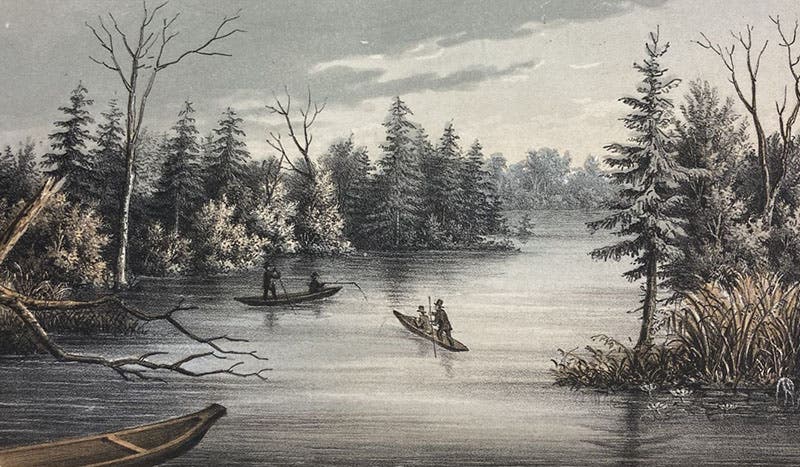
“Sunk lands looking north from the deep landing,” hand-colored engraving after drawing by David Dale Owen, in his Second Report of a
We also show some of the woodcuts from the second Indiana survey (he did one in 1837-39 and another in 1858-60, during which he died, so that his brother Richard had to complete the Report). Owen drew these illustrations as well (fifth and sixth images), and it is hard to know how much of the charming style is due to Owen and how much to his unnamed engraver. They remind me of the woodcuts of Rockwell Kent.

![Falls of Eel River, Owen County [Indiana], wood engraving, drawn by David Dale Owen, p. 88, in Report of a Geological Reconnoissance of Indiana, by Richard Owen, 1862 (Linda Hall Library)](https://preview-assets-us-01.kc-usercontent.com:443/9dd25524-761a-000d-d79f-86a5086d4774/605cb614-fefe-4d40-b2e0-427a7228bdba/owen5.jpg?w=800&h=500&auto=format&q=75&fit=crop)
Falls of Eel River, Owen County [Indiana], wood engraving, drawn by David Dale Owen, p. 88, in Report of a Geological Reconnoissance of Indiana, by Richard Owen, 1862 (Linda Hall Library)
The geology Owen was practicing was not at all like that being undertaken in Great Britain by the likes of Charles Lyell, Roderick Murchison, and Charles Darwin, with its concern for geological process and the origins of landforms. Owen was interested in identifying formations, and naming them, and working out a crude sequence of strata. He sought out minerals, and rock suitable for building (he supposedly recommended the lilac-colored limestone that was used to build the original Smithsonian Institution building, but it came from Virginia, not the Midwest). He did not concern himself with theories of the earth, or with the possible role of glaciers in shaping the Midwest.

![“Iron, coal, and paint banks, near Dover Hill [Indiana],” wood engraving, drawn by David Dale Owen, p. 174, in Report of a Geological Reconnoissance of Indiana, by Richard Owen, 1862 (Linda Hall Library)](https://preview-assets-us-01.kc-usercontent.com:443/9dd25524-761a-000d-d79f-86a5086d4774/6830a207-506d-45b8-8856-bd0d85e80051/owen6.jpg?w=451&h=600&auto=format&q=75&fit=crop)
“Iron, coal, and paint banks, near Dover Hill [Indiana],” wood engraving, drawn by David Dale Owen, p. 174, in Report of a Geological Reconnoissance of Indiana, by Richard Owen, 1862 (Linda Hall Library)
Owen built a home and laboratory in New Harmony and intended to settle down there as Indiana State Geologist, but it was not to be. By the age of 53, his body was totally worn out from two decades of surveys. Confined to bed, he dictated his final Report on Arkansas (using two stenographers), and then died, on Nov. 13, 1860. He was buried in the vault of Philadelphia geologist William Maclure, who had also planned to retire in New Harmony. Owen’s remains have since been moved to an Owen family plot nearby.

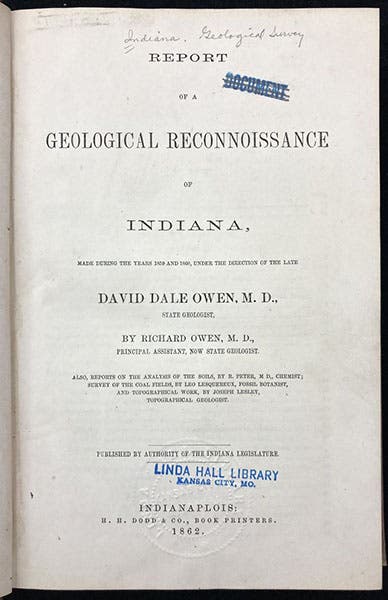
Title page, Report of a Geological Reconnoissance of Indiana, by Richard Owen, 1862 (Linda Hall Library)
David Dale Owen is probably the least-known important 19th-century American geologist. There is only one slim biography (the source of our portrait, second image), and it was written over 80 years ago. Owen deserves a statue or bust somewhere in Indiana, perhaps one carved from Smithsonian limestone. Or maybe it should be in the Smithsonian Institution itself.
William B. Ashworth, Jr., Consultant for the History of Science, Linda Hall Library and Associate Professor emeritus, Department of History, University of Missouri-Kansas City. Comments or corrections are welcome; please direct to ashworthw@umkc.edu.