Scientist of the Day - Florence Bascom

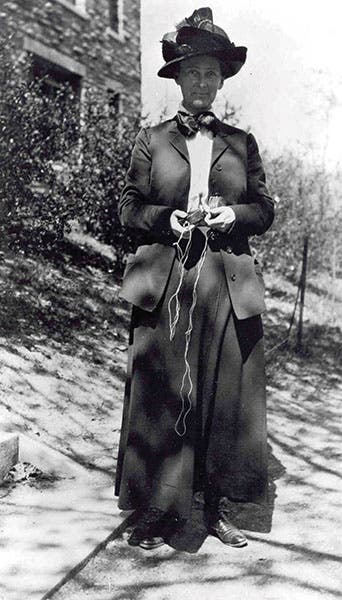
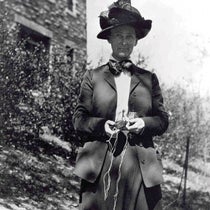
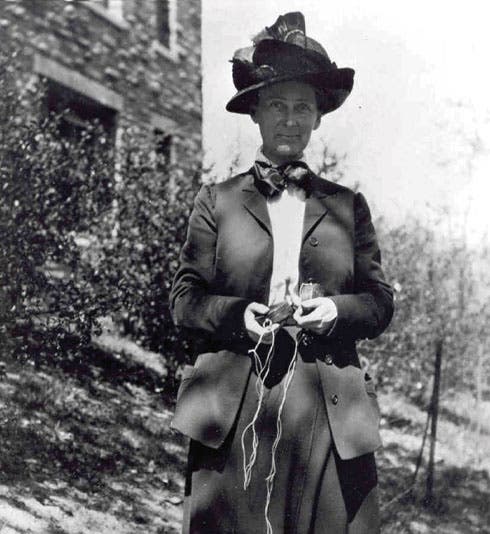
Portrait of Florence Bascom, holding a compass, undated photograph, Florence Bascom Papers, Smith College (onwisconsin.uwalumni.com)
Florence Bascom, an American geologist and professor, was born on July 14, 1862 (or possibly July 1, 1863), in Williamstown, Mass. Her father, John, was a professor of rhetoric at Williams College, and a strong believer in higher education for women. Her mother, Emma, was a noted advocate for women’s suffrage. So Florence had two strong advocates in her corner right from the start.

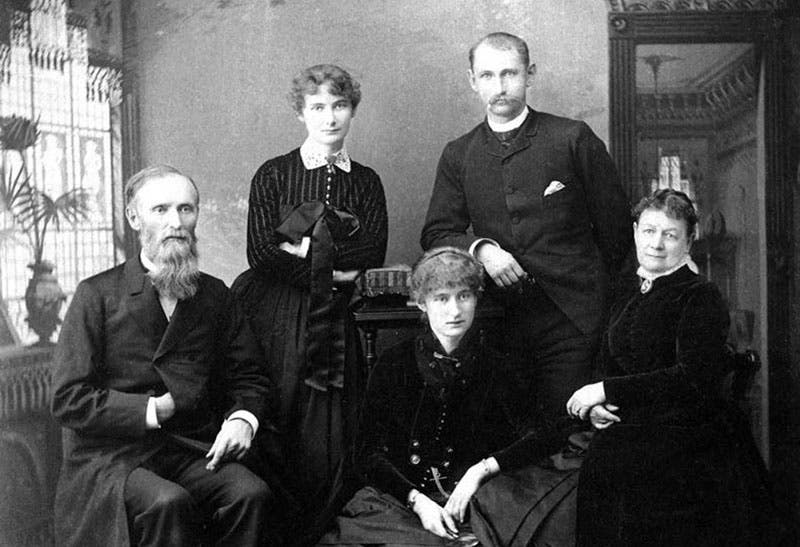
Family portrait of the Bascom family, with Florence second from left in the back, John at far left, and Emma seated at right, undated photograph (fossilbiasblog.com)
John’s biography does not tell us why he was called from Williamstown in 1874 to become President of the University of Wisconsin in Madison, but he must have had some special qualities, since not only did he get the job, he held on to it for 13 years, greatly reforming the campus, especially regarding the education of women.
Florence attended the University of Wisconsin, twice. She graduated first with a degree in art, in 1882; Florence then decided she would rather be a scientist, and she earned both a BS and an MS in geology by 1887, the same year her father returned to the teaching ranks after his stint as university president.

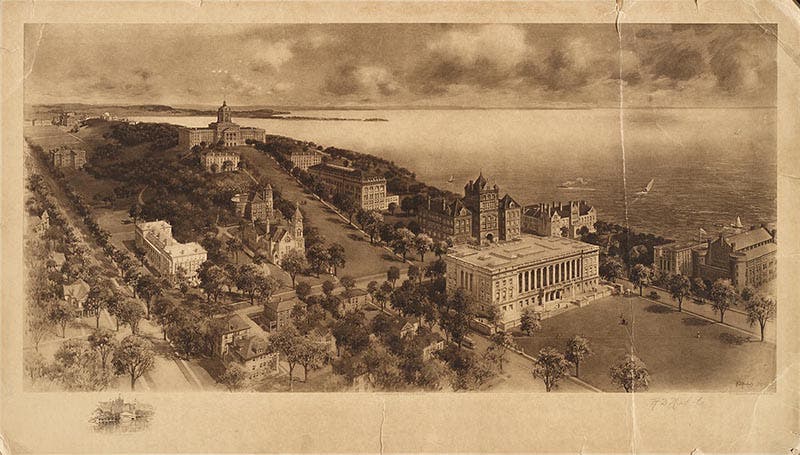
Bascom Hill on the UW-Madison campus; Bascom Hall is at the top of the hill; Science Hall, home of the Geology Department, is at bottom right of the Hill, just behind the neoclassical building (now the Wisconsin State Historical Society), photograph, 1907 (news.wisc.edu)
Florence decided to pursue a PhD at Johns Hopkins University, although it took some arm-twisting from her father, since Johns Hopkins had never had a woman PdD candidate in any field of study. She studied petrology and petrography, the microscopic examination and mapping of mineral structure, and received her PhD in 1893, only the second geology PhD for a woman in the entire country.
Bascom taught at several colleges and immediately began publishing significant papers on petrology and petrography, including one in the new Journal of Geology, which had been founded and was edited by one of her former teachers in Madison, Thomas Chrowder Chamberlin. It always helps an up-and-coming scholar to know an editor or two.

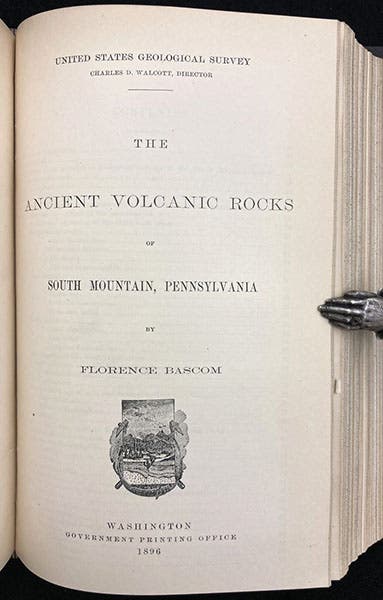
First page, “The ancient volcanic rocks of South Mountain, Pennsylvania,” by Florence Bascom, Bulletin of the U.S. Geological Survey, no. 136, 1896 (Linda Hall Library)
Within a few years, Bascom was snapped up by Bryn Mawr, who asked Bascom to found a geology department, offering her the attic floor of their 3-story science building, already fully occupied by departments of physics, chemistry, and biology. She did so with enthusiasm and scholarly excellence, and adept though she was in the lab, she was apparently even better in the classroom, inspiring generations of young, geologically minded young women, all the while continuing to publish important petrographical papers (see our fourth, fifth, and sixth images).

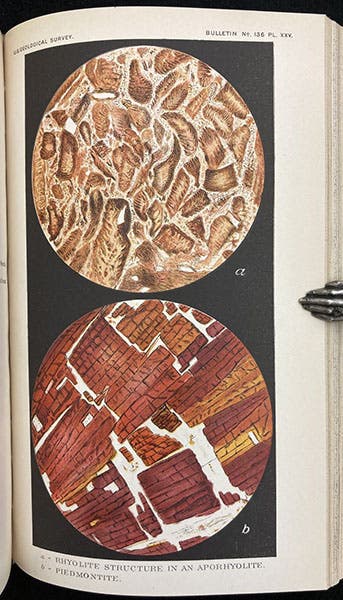
Microscopic views of two aporhyolites, a term coined by Bascom, plate 25 in “The ancient volcanic rocks of South Mountain, Pennsylvania,” by Florence Bascom, Bulletin of the U.S. Geological Survey, no. 136, 1896 (Linda Hall Library)
Bascom also worked at the U.S. Geological Survey (USGS), starting even before she began at Bryn Mawr, the first woman on the USGS staff, and she continued there after her retirement from teaching in 1928. She specialized in a geologically complex region in Pennsylvania known as the Piedmont, which she showed had volcanic origins, but had been metamorphosized so that the rocks looked sedimentary. The USGS has named one of their research labs in Reston, Va., the Florence Bascom Geoscience Center.

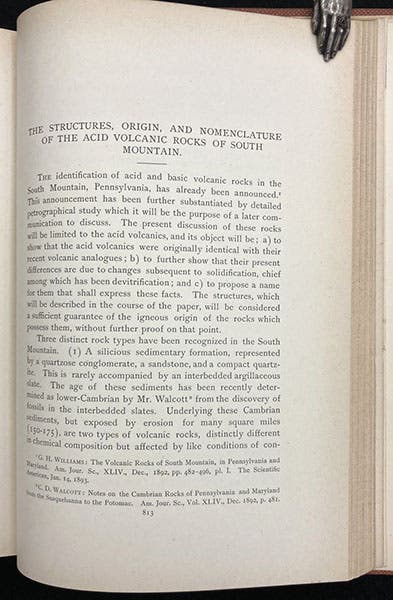
First page of Florence Bascom’s first professional paper, “The structures, origin, and nomenclature of the acid volcanic rocks of South Mountain,” (signature is on last page), Journal of Geology, vol. 1, p. 813, 1893 (Linda Hall Library)
When I attended UW at Madison, the History of Science department was located in South Hall on Bascom Hill, right next to Bascom Hall, both named, not for Florence, but for her father, John (third image). Down the hill was Science Hall, one of the oldest buildings on campus, where Florence pursued two of her degrees in geology. In my day, they wanted to tear the building down, but couldn't, as it had a steel frame buttressed by solid-rock masonry walls and was deemed impregnable to a wrecking ball. Now they are, I understand, planning an extensive addition. I hope those additions include a monument to the building’s distinguished former student, a Bascom not named John.

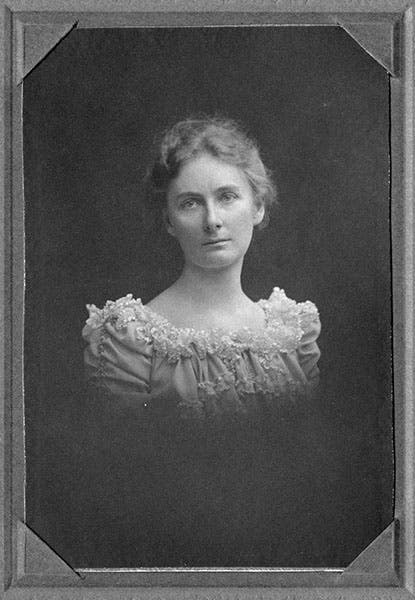
Another portrait of Florence Bascom, undated photograph, Smithsonian Institution Libraries (si.edu)
Florence died on June 18, 1945, at age 82, and was buried in the family plot in the Williams College Cemetery. The various memorial stones are unremakable, but you can see them here. One of them says Florence was born on July 1, 1863. Tombstones are usually (but not always) right on such matters, so some research remains to be done.
William B. Ashworth, Jr., Consultant for the History of Science, Linda Hall Library and Associate Professor emeritus, Department of History, University of Missouri-Kansas City. Comments or corrections are welcome; please direct to ashworthw@umkc.edu.