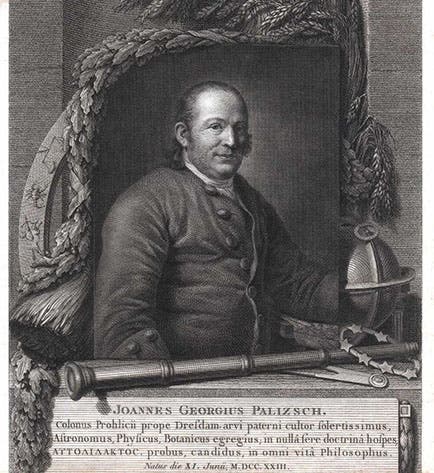
Scientist of the Day - Georg Palitzsch

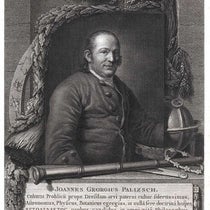
Portrait of Georg Palitzsch, engraving, providing his birthdate of June 11, 1723 (Wikimedia commons)
Johann Georg Palitzsch, a German farmer, was born June 11, 1723, in Prohlis, now part of Dresden. Palitzsch is a shadowy figure about whom we wish we knew more. His father owned and ran a farm, which Georg inherited and managed successfully. But he also had a thirst for knowledge, especially about the movements of heavenly bodies. He taught himself astronomy, Latin, and spherical geometry, often using books that he copied out by hand, since he could not afford to buy them. And somewhere along the line, he learned about the comet of 1682.

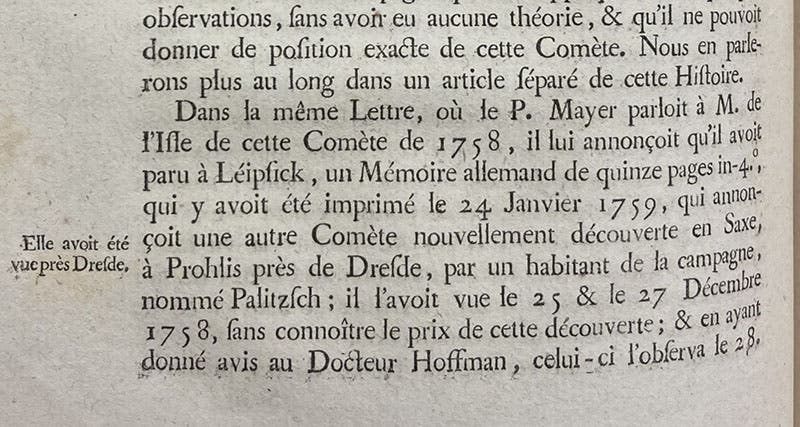
Paragraph from a long article on the recovery of Halley’s Comet, mentioning Palitzsch (“a country-dweller”) by name and his discovery date of Dec. 25, 1758, Histoire de L’Academie Royale des Sciences, p. 142, for the year 1759 (Linda Hall Library)
We now call it Halley's Comet, but it wouldn't get that name until it came back in 1758-59, as Edmond Halley had predicted. Halley had made a general study of historical comets and noted that three comets followed nearly the same path through the heavens, and had appeared in 1531, 1607, and 1682, just about 75-76 years apart. Halley in 1705 wrote a paper in which he proposed that these manifestations were sequential appearances of the same comet, which is in an orbit that takes it around the Sun in about 75 years. And he predicted that, if he were right, it should return in late 1758 or early 1759. He could not be more exact, because he suspected (rightly) that Jupiter and/or Saturn perturbed the comet's motion as it went by. And then Halley died in 1743, unable to outlive his comet.

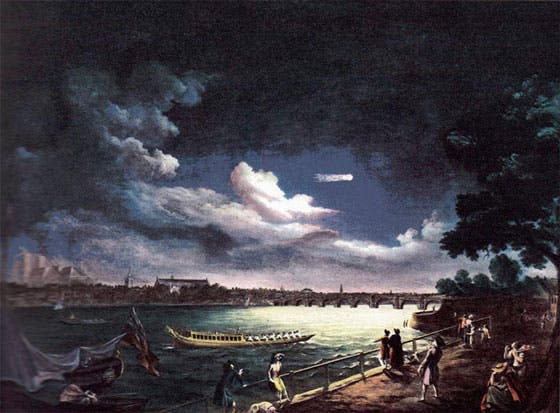
Painting of the Thames in London, showing Halley’s Comet in the sky, oil on canvas, by Samuel Scott, 1759?, present location unknown (robertstephenparry.com)
Every astronomer in the 1750s knew about the prediction, and many of them geared up to be the first to see it and confirm Halley's prediction (and Newton's theory of planetary motion, on which the prediction was based). One of the most eager of these was a young French astronomer, Charles Messier, who would soon become the supreme comet hunter in all of France. He did indeed spot Comet Halley on Jan. 21, 1759, to his great excitement. And then, to his great distress, he would soon learn that Georg Palitzsch had beaten him to the punch by almost a month.

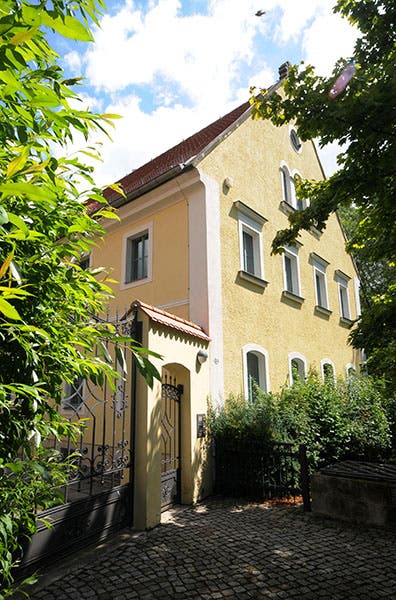
The outside of the Palitzsch Museum in Dresden, recent photograph (palitzsch-museum.de)
Palitzsch had a good telescope – not a big one, but you don't need a large instrument to see a comet. You need only a keen eye, and you need to know where to look. We don't know when Palitzsch started comet-hunting, but we know that he saw a fuzzy spot that looked like a comet without a tail on Christmas Day, Dec. 25, 1758. He saw it again on Dec. 27, and told an educated friend about his discovery, and his friend saw it with his own eyes on Dec. 28. The friend promptly published a short note in a Dresden periodical, giving Palitzsch the credit in print that he was due.

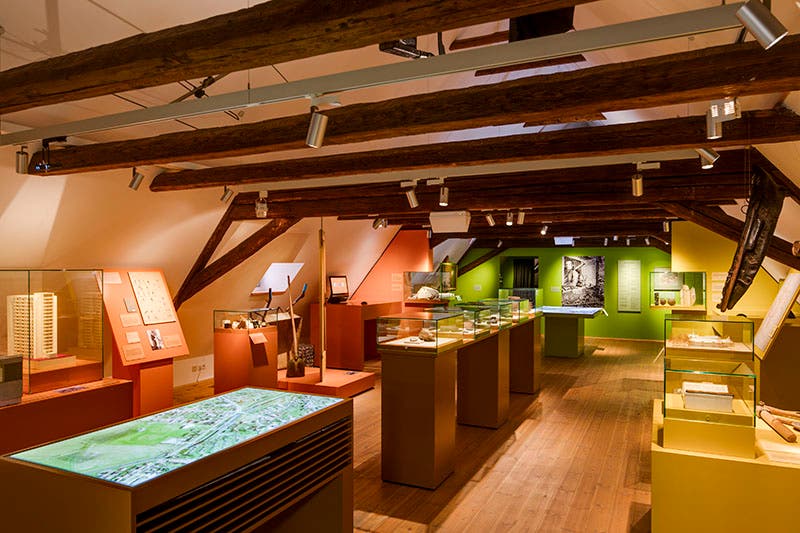
The interior of the Palitzsch Museum in Dresden, recent photograph (palitzsch-museum.de)
Naturally, no one in France read Dresden newsletters, and so no one was aware that the comet had been spotted by a German farmer before the year 1759 was even underway. Someone must know when Messier learned he had been pre-empted, but I do not. By the time the Royal Academy of Sciences in Paris got around to publishing their Histoire for 1759, in which the recovery of the comet was the news event of the year, they squeezed in a short paragraph mentioning Palitzsch by name and his Christmas-Day discovery, which I thought I would show here, since I have never seen it reproduced (second image). But it doesn't tell us much about how and when professional astronomers learned about Palitzsch and his sighting of Comet Halley.
Surprisingly, there are few paintings from 1759 that show Halley’s Comet in the sky. In fact, I know of only one, by Samuel Scott, who left us many paintings of the Thames in London (see our post on James Vauloue last fall), including one that includes Halley’s Comet, which I show from an online source (third image). But I don’t even know where the original is – one source has it in the Royal Museums Greenwich, and another the Yale Center for British Art, but I cannot find Scott’s painting on either website. Another mystery to be solved!

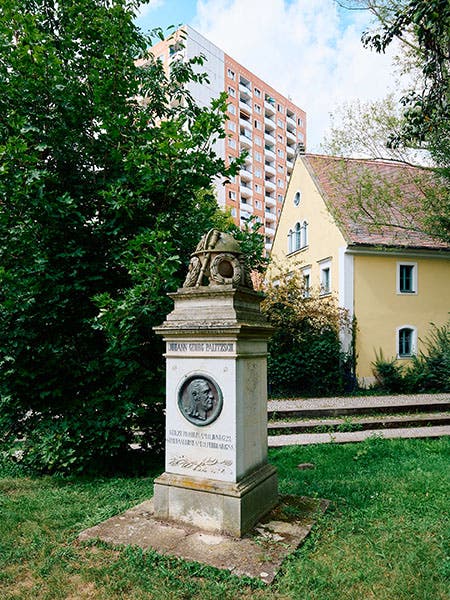
Monument honoring Georg Palitzsch, with a relief portrait, outside of the Palitzsch Museum in Dresden, recent photograph (palitzsch-museum.de)
Palitzsch may not have received much in the way of accolades in the 18th century, but he has a fairly secure place in history now, at least in Germany. The original farmhouse where he kept all his books and papers was destroyed by Napoleon's troops in 1813 (no, this was not in retaliation for showing up French astronomers), but another farmhouse was found in Prohlis that would do, and it was turned into the Palitzsch Museum. It has its own website, and lots of stuff on display (fifth image), but I don't know if anything original of Palitzsch has survived. If someone would please visit and report back, we would all appreciate learning more. I know there is a nice portrait relief mounted outside, since there is a photo on the museum website (last image).
Comets used to be seen as omens, usually bad ones. To amateur astronomers, comets have, since Palitzsch, been a blessing, one of the few areas in astronomy where anyone with the right skills and knowledge, and a little luck, can make his or her mark, as Georg Palitzsch did.
William B. Ashworth, Jr., Consultant for the History of Science, Linda Hall Library and Associate Professor emeritus, Department of History, University of Missouri-Kansas City. Comments or corrections are welcome; please direct to ashworthw@umkc.edu.