Scientist of the Day - Mary H. Kingsley

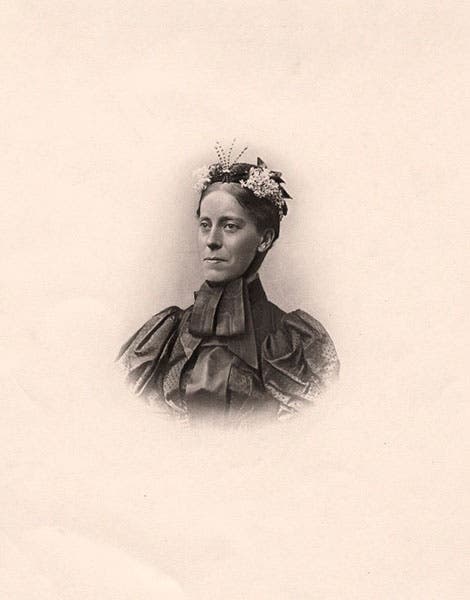
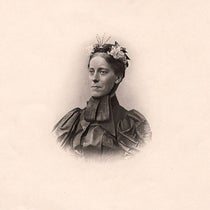
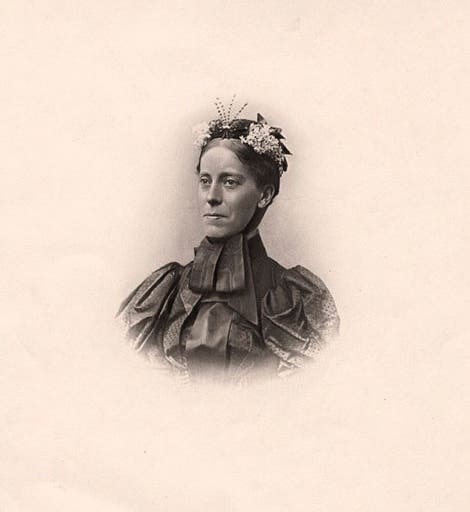
Portrait of Mary Henrietta Kingsley, by Arthur King, photogravure, before 1900, National Portrait Gallery, London (npg.org.uk)
Mary Henrietta Kingsley, an English traveler to West Africa, was born Oct. 13, 1862, in London. Her father was a physician, a frequent traveler (although he never took his family with him), and a writer. Her uncle Charles, of Water-Babies fame, was a writer as well. Mary, like many young women of her time and station, was given no opportunity for a formal education, although she did have access to her father's considerable library. They moved to Highgate, and then to Cambridge, where she spent the late 1880s and early 90s tending to her aging parents.

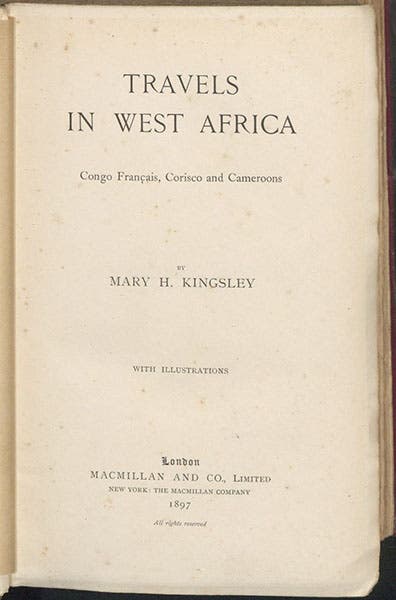
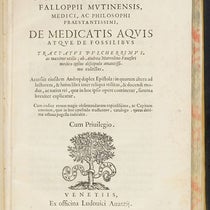
Title page, Travels in West Africa, by Mary H. Kingsley, 1897 (The Linda Hall)
When Mary was 30, both parents died within a week of each other, and Mary suddenly found herself with a respectable inheritance and no responsibilities. Almost immediately, she booked passage on a steamboat to West Africa.

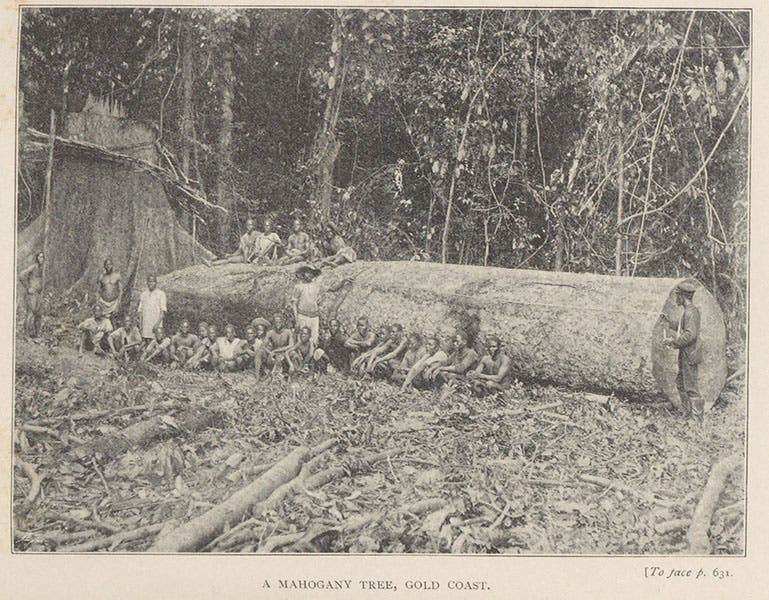
A felled mahogany tree, Gold Coast, photograph, Travels in West Africa, by Mary H. Kingsley, p. 631, 1897 (The Linda Hall)

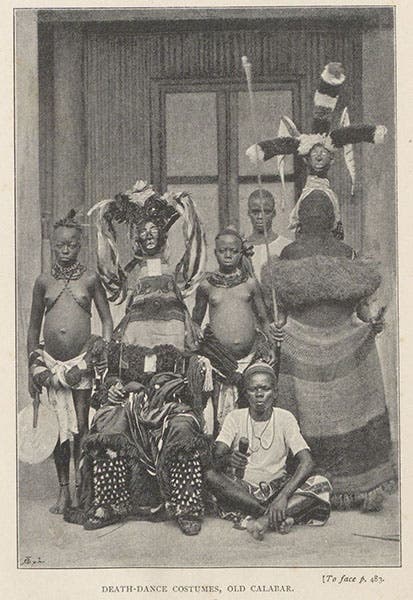
Death dance costumes, Old Calabar, photograph, Travels in West Africa, by Mary H. Kingsley, p. 483, 1897 (The Linda Hall)
Everyone told her she might as well just jump off Tower Bridge; the result would be the same. The steamboat company didn't even sell return tickets, for no one ever came back from the Gulf of Guinea. Mary went anyway, ostensibly to collect specimens for museums. She arrived in August of 1893, and found herself more intrigued by native culture than by the flora and fauna. The natives in turn could not believe that she had no husband, and was traveling alone.

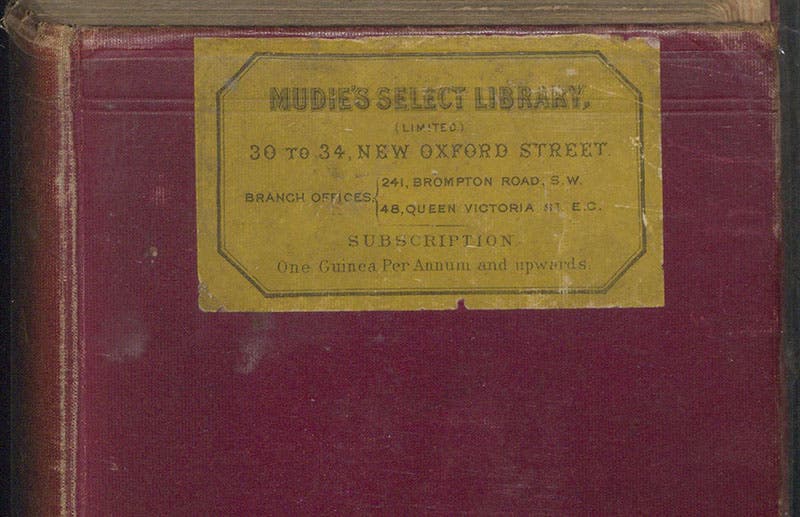
Mudie’s Select Library sticker, front cover, Travels in West Africa, by Mary H. Kingsley, 1897 (The Linda Hall)
Mary somehow avoided malaria and yellow fever and returned home after 5 months, and then she turned around and went back, this time for a full year. For this second trip, she negotiated with the British Museum - Natural History, to provide them with specimens, mostly fish, but insects as well if she could collect them. But mostly, she observed the local peoples, studying their religion and their customs, and the impact of missionaries, of which Kingsley generally disapproved. She spent considerable time with the Fan people (now Fang), who were thought at the time to be cannibals. She even climbed Mount Cameroon – at 13,500 feet, the tallest mountain in sub-Saharan Africa – and she was the first woman to do so.

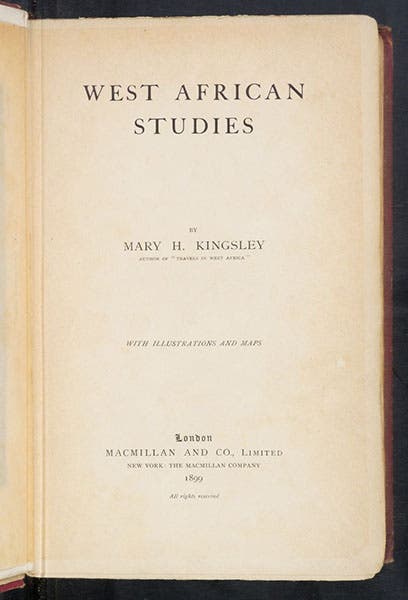
Title page, West African Studies, by Mary H. Kingsley, 1899 (The Linda Hall)
After her second trip, Kingsley decided she had a story to tell, so she wrote Travels in West Africa and convinced London publisher George MacMillan to publish it in 1897. It was a best seller, and suddenly Mary had speaking opportunities all over England. She turned out to be a terrific raconteur – funny, self-deprecating, insightful, and endearingly strange. Her lectures were lantern-slide presentations, and there were lots of photos in her books, so she must have been a photographer as well. Many copies were purchased by Mudie's Select Library to circulate among their subscribers. The copy we just acquired has its Mudie's label still firmly in place on the front cover (fifth image). We once wrote a post on Charles Mudie.

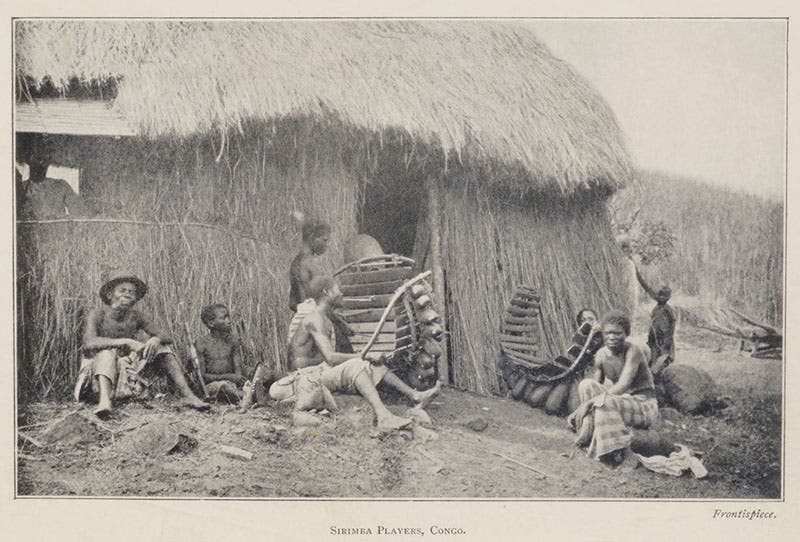
Sirimba players, Congo, photograph frontispiece, West African Studies, by Mary H. Kingsley, 1899 (The Linda Hall)
Two years later, I suppose after public interest began to wane, she published a second book, West African Studies (1899), which, as one might expect, was more reflective about non-Christian societies and their way of life. The second book was almost as popular as the first. We have just acquired it as well.

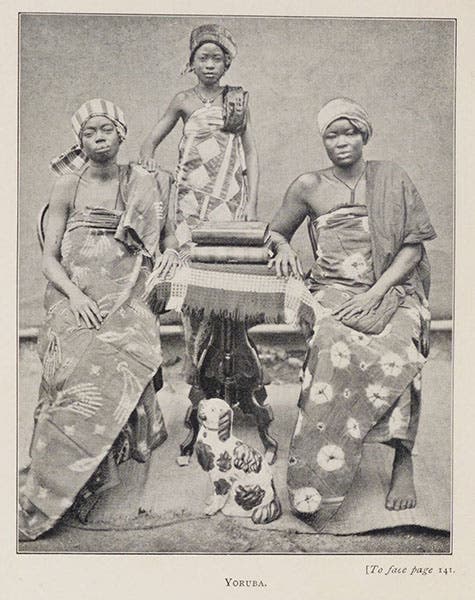
Three Yoruba persons, photograph, West African Studies, by Mary H. Kingsley, p 141, 1899 (The Linda Hall)
Although Mary intended to collect many insects for the British Museum, in the end, she brought back only 12. One of them was a longhorn beetle, a specimen with backward-sweeping antennae longer than its body (ninth image). But there are some 30,000 species of longhorn beetles on Earth, and no one identified Kingsley's beetle for well over 100 years. It just sat there in a box. Then, in 2014, a curator from the Natural History Museum took Kingsley's beetle to the Prague Insect Fair and showed it to the world's expert on African longhorn beetles, a Frenchman, who knew at once that it was a new genus. He named it Pseudictator kingsleyae, Kingsley's pseudo-Dictator beetle. It is the only specimen that has ever been collected by anyone. That is a unique memorial for a unique woman.
.jpg#/media/File:Pseudictator_kingsleyae_Juhel,_2015_Holotype_(17753026841).jpg)
Pseudictator kingsleyae, a longhorn beetle collected by Mary H. Kingsley, West Africa, ca 1895, Natural History Museum, London (Wikimedia commons)
It is not surprising that Kingsley has attracted the attention of scholars looking at how women were able to penetrate the male-dominated world of science in the 19th century. I profited from the chapter on Kingsley in Solitary Travelers: Nineteenth-Century Women's Travel Narratives and the Scientific Vocation (2001), by Lila Marz Harper. The story of Mary and her longhorn beetle is told in the delightful book, The Lost Species (2017), by Christopher Kemp.

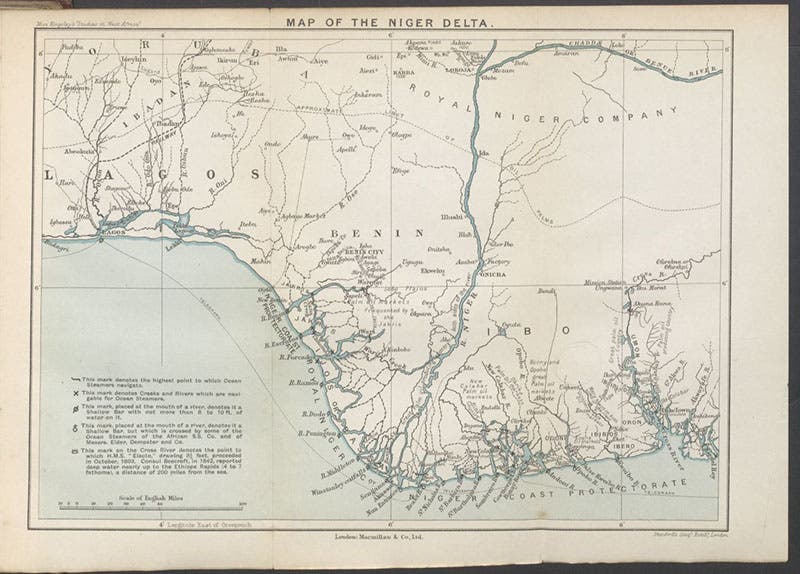
Map of Niger River delta, lithograph, West African Studies, by Mary H. Kingsley, 1899 (The Linda Hall)
Mary went to South Africa in 1899 to collect fish for the British Museum, but while she was there, the Boer War broke out, and she volunteered to tend to the wounded in a Boer prisoner-of-war camp. She contracted typhoid fever and died on June 3, 1900, just 37 years old. Idiosyncratic to the end, she asked to be buried at sea, and she was. A studio portrait had been taken sometime before she left England for the last time, and it was included in at least one of the later editions of West African Studies, but not in our first edition. Eventually, Macmillan gave the master print to the National Portrait Gallery, which we have used here (first image). It is a beautiful portrait.
William B. Ashworth, Jr., Consultant for the History of Science, Linda Hall Library and Associate Professor emeritus, Department of History, University of Missouri-Kansas City. Comments or corrections are welcome; please direct to ashworthw@umkc.edu.