Scientist of the Day - Octavius Morgan

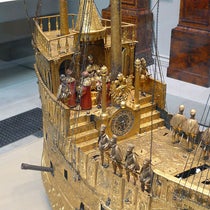
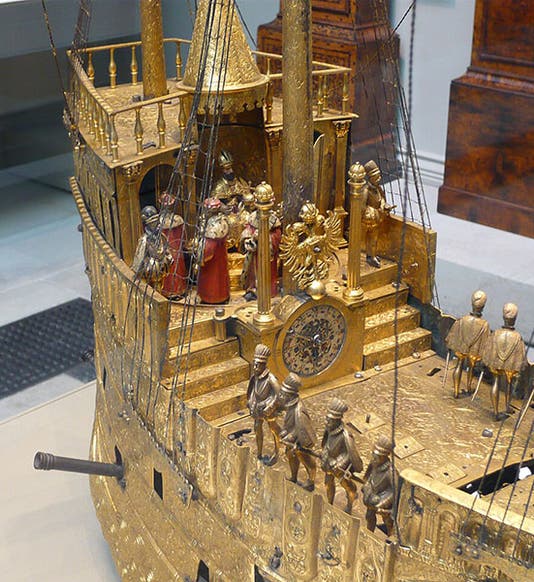
Detail of “The Nef,” a clockwork ship built by Hans Schottheim in 1585, later acquired by Octavius Mogan, and given to the British Museum in 1866 (Wikimedia commons)
Charles Octavius Morgan, nearly always known by his middle name Octavius, died Aug. 5, 1888, at the age of 84. Morgan was a British political figure and a collector of Renaissance clocks and watches, nearly all of which he gave to the British Museum in London, either during his life or by bequest at his death. His most famous gift was the "Nef," or mechanical galleon, which he turned over to the Museum in 1866. Nef was a medieval word for a ship, but it has gradually morphed into a term for a table-top mechanical ship.

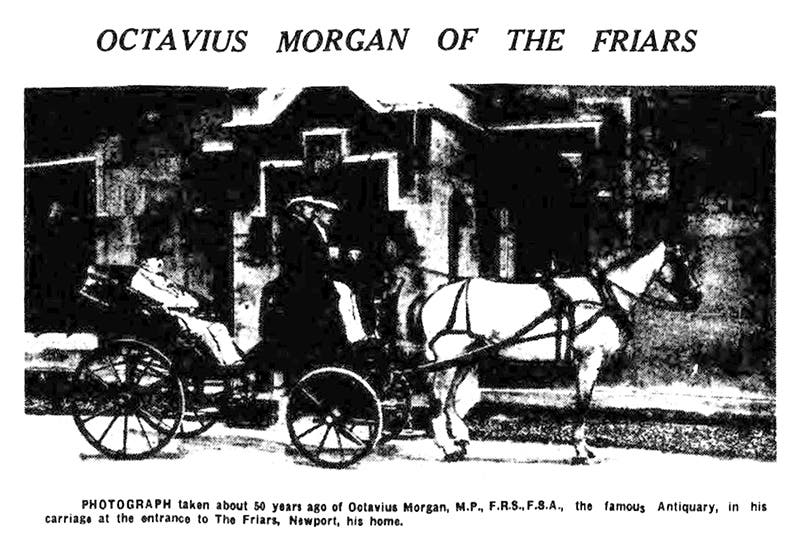
Newspaper photo of Octavius Morgan in a carriage, unknown source and date (holeousia.com)
The Nef that Morgan acquired was built by Hans Schlottheim of Augsburg in 1585, and it is quite an amazing piece of clockwork. It is not a tiny model – the masts are fully three feet tall. It has an iron and wood frame and is gilt with copper, with four wheels and a clockwork motor that would move the Nef slowly along a banquet table. On the stern deck sits the Holy Roman Emperor, Rudolf II, and as the ship glided past the guests, the 7 Imperial electors would circle and bow when they came in front of His Majesty (first image). We would show you more images, but we published a post on Schlottheim and the Nef, with many photos of his wondrous ship. You can see even more photos on the British Museum webpage for the Nef.

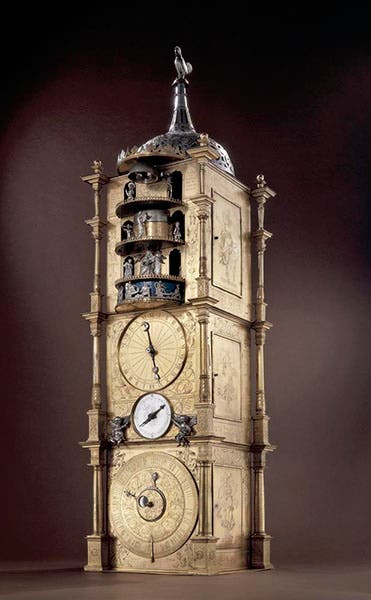
The Strasbourg Clock, built by Isaac Habrecht, 1589, acquired by Octavius Morgan, bequeathed to the British Museum, 1888 (britishmuseum.org)
Another object bequeathed by Morgan to the British Museum is usually referred to as the Strasbourg clock (third image). It is four-and-a-half-feet tall and was originally weight-driven, although it was later modified. The clock was built in Strasbourg in 1589 by a Swiss clockmaker, Isaac Habrecht, and later acquired by Morgan. In addition to telling the time, the Christian virtues and the Worldly virtues circle in and out at the top, and other figures strike the bells, as we see in a detail (fourth image

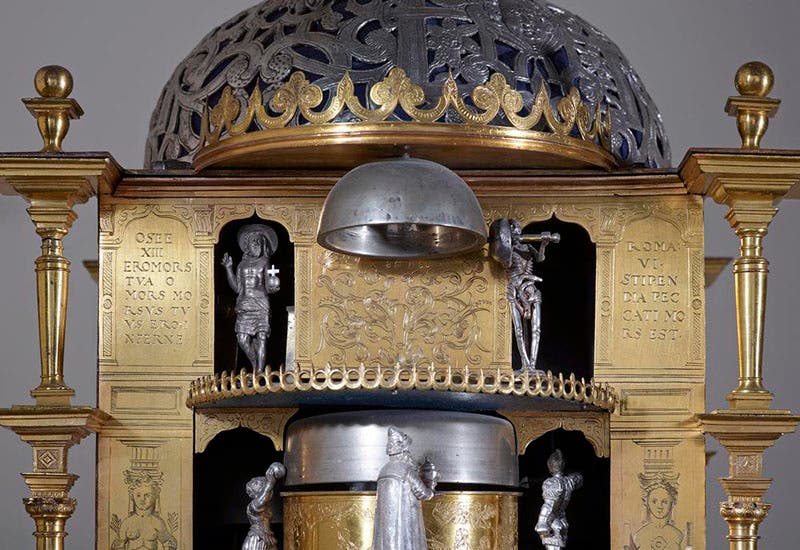
Detail of the top of the Strasbourg Clock, British Museum (britishmuseum.org)
A much more interesting object, mechanically, is a cow-and-milkmaid automaton clock, made in Poland, "in the Augsburg manner," around 1580 (fifth image). The man with the backpack points to the hours with his staff, but the interesting action occurs under the cow, where the milkmaid fills a bucket with real milk from the cow's udders. A photo taken of the cow's internal mechanism shows the tiny vat that holds the milk, as well as the linkages that make the cow's eyes roll back and forth (sixth image).

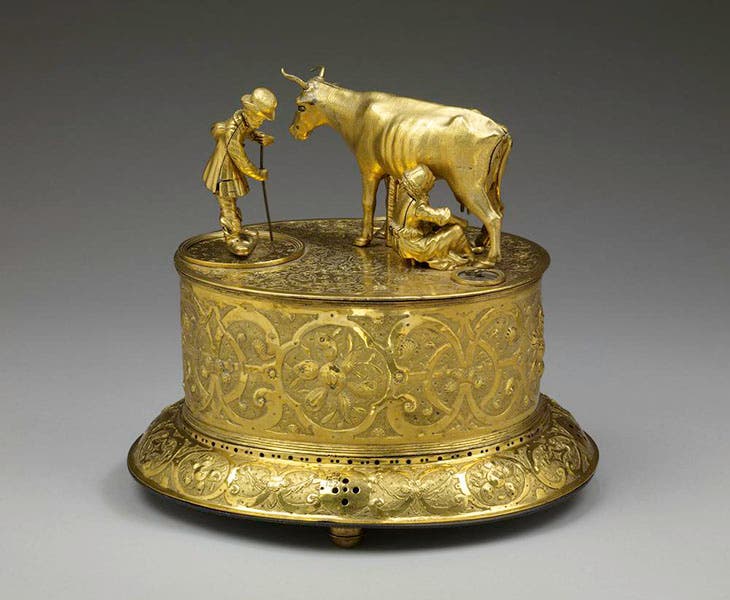
Cow-and-milkmaid automaton clock, made in Poland, ca 1580, bequeathed to the British Museum by Octavius Morgan (britishmuseum.org)

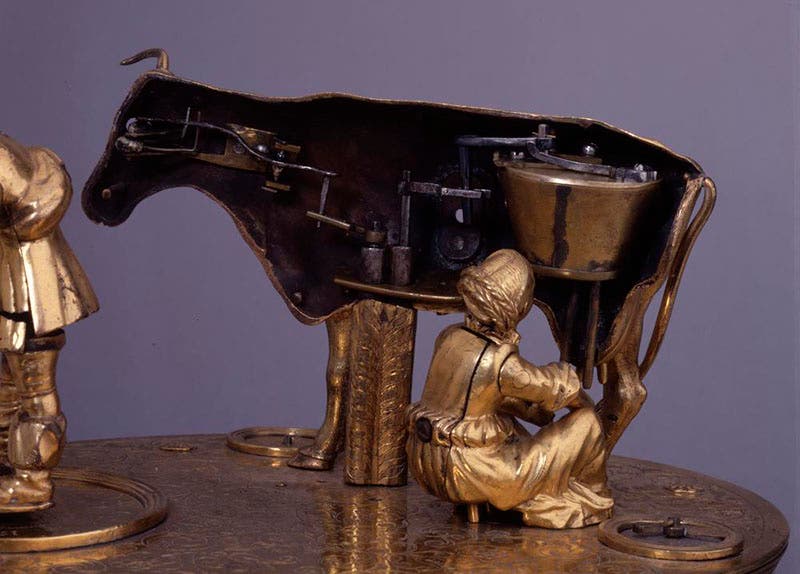
Interior of the cow, cow-and-milkmaid automaton clock, showing the milk reservoir and the linkage for moving the cow’s eyes, British Museum (britishmuseum.org)
You can see all the hundreds of clocks and watches that Morgan gave to the British Museum at this link (click on "related objects"). As far as I could tell, scrolling through the 525 objects, there were hardly any scientific instruments in the Morgan collection, except for a few astrolabes. One of them, the Damascus astrolabe, is especially significant, both because of its age (made in 1334 CE), and because it was the official timekeeper for the Great Umayyad Mosque in Damascus (last image).

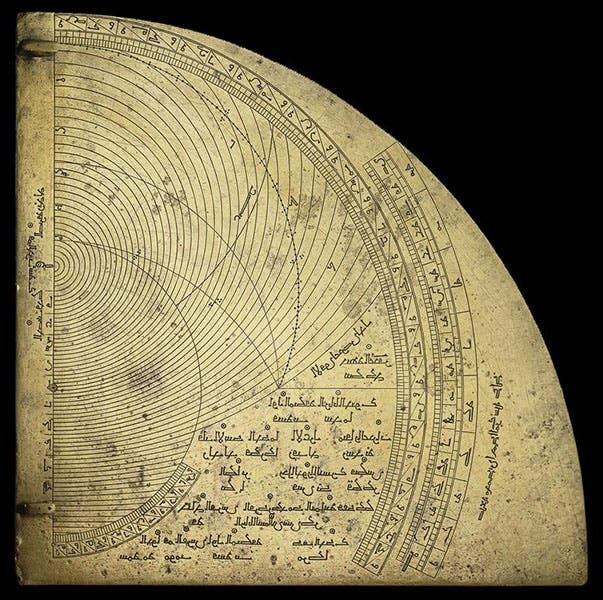
Damascus astrolabe, a quadrant made by Muhammad ibn Ahmad al-Mizzi, 1333-1334 CE, bequeathed by Octavius Morgan to the British Museum (britishmuseum.org)
Oddly, for a man with his fame and fortune, there are very few portraits or likenesses of Octavius Morgan. The National Portrait Gallery has none. The one we show here is a newspaper photo, borrowed from a blog. It seems more authentic than the few you can find on Wikipedia and in similar sources.
William B. Ashworth, Jr., Consultant for the History of Science, Linda Hall Library and Associate Professor emeritus, Department of History, University of Missouri-Kansas City. Comments or corrections are welcome; please direct to ashworthw@umkc.edu.