Scientist of the Day - William Beebe

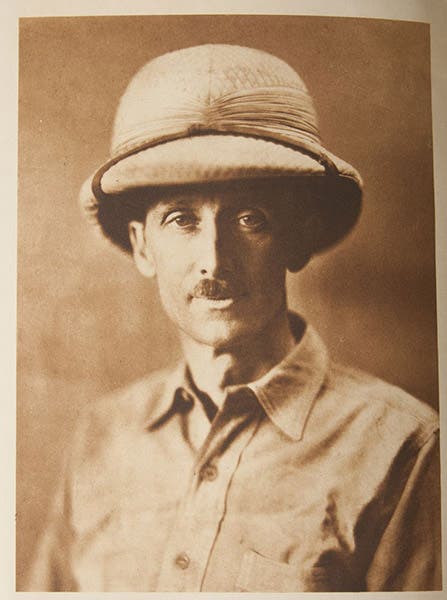
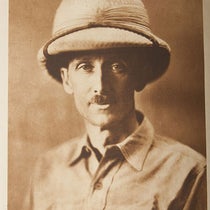
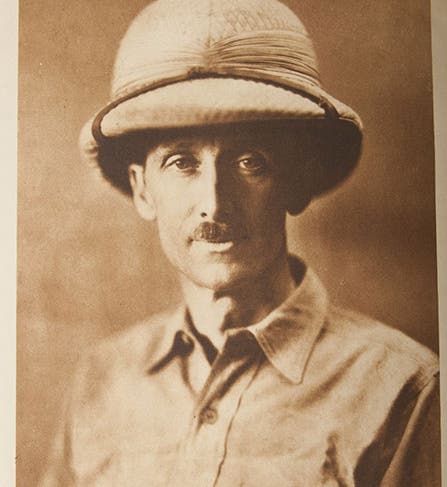
William Beebe, photograph, undated (abebooks.com)
William Beebe, an American ornithologist, traveler, deep-sea explorer, and author, was born in Brooklyn on July 29, 1877. He grew up in East Orange, New Jersey, and developed an interest in wildlife through the American Museum of Natural History in New York. He attended Columbia University, where many of the zoology faculty also had appointments at the Museum. He met Henry Fairfield Osborn, who would later become director of the Museum, and they formed a lifelong friendship. Osborn arranged for Beebe to get a position as assistant curator at the New York Zoological Park, which opened in 1899. Beebe happily left Columbia without ever getting his degree.

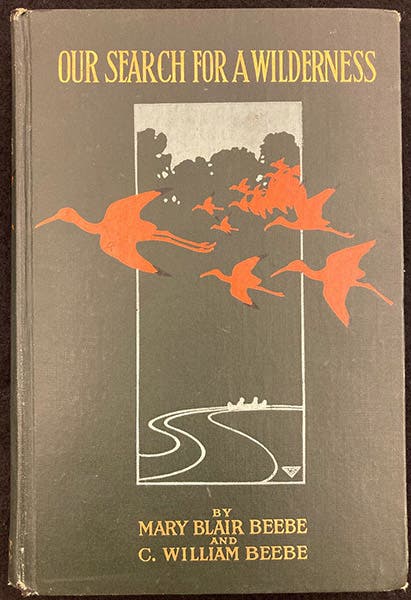
Front cover, Our Search for a Wilderness, by Mary Blair Beebe and C. William Beebe, 1910 (The Linda Hall)
From 1900 until the outbreak of World War I, Beebe organized collecting expeditions, set up zoological stations, and wrote books. He was an indefatigable writer, and a good one, and books like Two Bird-Lovers in Mexico (1905) and Our Search for a Wilderness (1910, written with his wife Blair; second image) were popular with the public, and with notables such as Theodore Roosevelt, who would write prefaces for some of his later books. Beebe had great personal charm, and his lectures would draw audiences of several thousand admirers. He was as famous as any scientist in America during the first half of the 20th century.

Members of William Beebe’s first Galapagos expedition, with Beebe at far right, Isabel Cooper (seated, second from left), and Ruth Rose (third from left),1923 (Wikimedia commons)
One of Beebe's most extensive early trips was in pursuit of the pheasants of the world. A wealthy patron underwrote the 17-month, around-the-world expedition for Beebe and his Blair, resulting (after WWI) in a sumptuous publication, A Monograph of the Pheasants (1918-22). We wrote a post on this book, a fine 4-volume set which we have in our collections, in June of 2015, when this series was just getting started, and the texts were somewhat abbreviated, although the six images of pheasants have held up well.

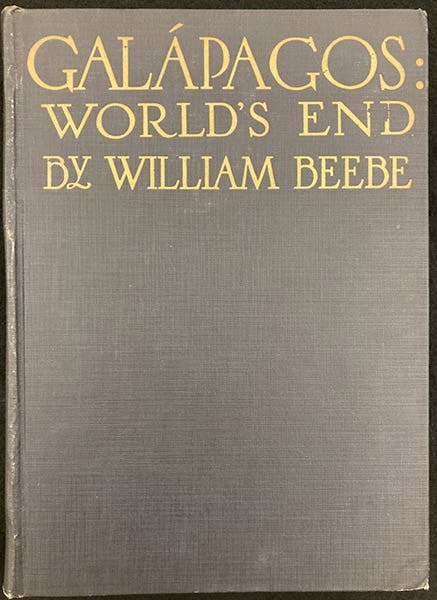
Front cover, Galápagos: World’s End, by William Beebe, 1924 (The Linda Hall)
Beebe made two acclaimed trips to the Galápagos Islands in 1923 and 1925, the second in a steam yacht, the Arcturus. During these expeditions, Beebe started making dives using diving helmets, thus adding the skills of a marine biologist to his repertoire. Around 1930, he got the idea for a diving submersible, although he had in mind some kind of cylinder. An engineer, Frederick Otis Barton, Jr., heard of Beebe's scheme and realized he could design a better vessel. He and Beebe worked out an agreement, and the result was a diving sphere, the Bathyscape, which made a series of deep dives in 1933, and resulted in the best-selling book, Half Mile Down (1934). We wrote a post on Barton and the Bathyscape in 2019.

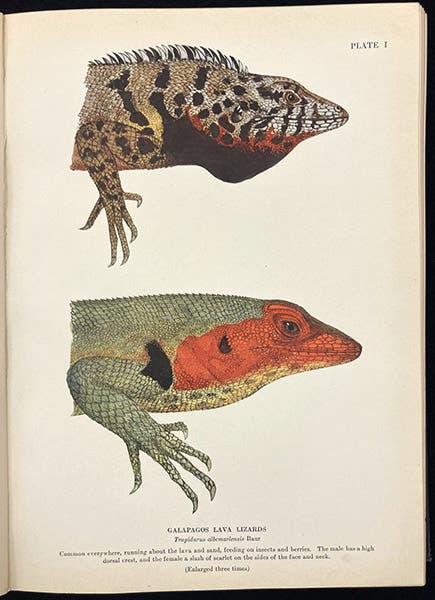
“Galápagos lava lizards,” drawn by Isabel Cooper, color plate in Galápagos: World’s End, by William Beebe, p. 78, 1924 (The Linda Hall)
To me, the most fascinating aspect of Beebe's career is that he liked women assistants and was not at all reluctant to give women important responsibilities and to take them along on expeditions, at a time when this was not done. Two of his assistants were wives (Blair divorced him in 1913, and he then married Elswyth Thane in 1927), but the other 7 were employees. He was intimate with two of them, which surely would have gotten him fired today, but he remained good friends with them all, even when flings were over. Some were artists, some were naturalists, and all went on to prominent careers.

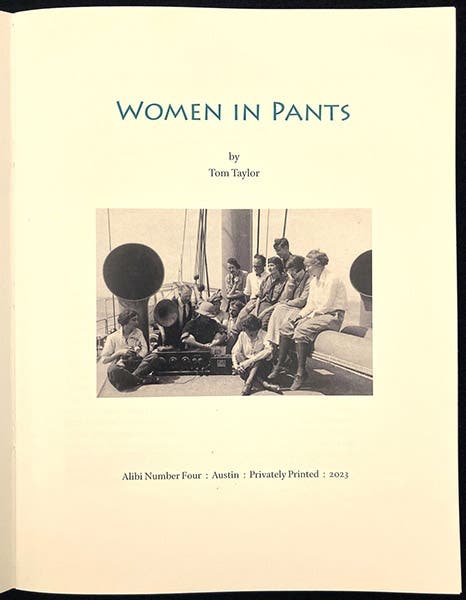
Title page, Women in Pants, by Tom Taylor, Alibi number four, 2023, with a photo that includes five of Beebe’s women employees and himself in the pith helmet (author’s copy)
A friend of mine, Tom Taylor – a fine press printer in Austin, a former dealer in rare ornithology books, and an inveterate collector of all manner of books and ephemera – put together several shelves of publications related to the women in Beebe's life, including manuscript diaries and photograph albums. Tom fends off retirement by publishing, once a year, a monograph on some aspect of his collection. He calls the series Alibi, and since he is a fine-press printer, the issues are beautiful in all the ways that fine-press products distinguish themselves from ordinary publications, although each issue of Alibi is different in format. Tom prints up 100 copies of each and mails them out to whomever he chooses. It is one of the good fortunes of my book-life that I am on that mailing list. Anyway, Alibi no. 4, 2023, was titled "Women in Pants," and presented nine of Beebe's female employees or wives and the careers they established, with illustrations from Tom’s collection (last image). The women deserve mention by name, so here they are, in order of appearance: Blair Niles (first wife), Ruth Rose, Helen Tee-Van, Isabel Cooper (she drew the lava lizards above), Marie Fish, Elswyth Thane (second wife), Gloria Hollister, Else Bostelmann, and Jocelyn Crane. Several of these should have a Scientist-of-the-Day entry of their own, a merit I will try to accommodate in the next several years. Meanwhile, you can learn a little more about Tom Taylor, and find a link to an excellent video about Tom’s career, in our post on Hugh Weddell.
William B. Ashworth, Jr., Consultant for the History of Science, Linda Hall Library and Associate Professor emeritus, Department of History, University of Missouri-Kansas City. Comments or corrections are welcome; please direct to ashworthw@umkc.edu.